Improving Situational Awareness in Aviation with Computer Vision and Real-Time Analytics
.jpeg)
Situational awareness determines how effectively pilots and air traffic controllers perceive, interpret and anticipate changing flight conditions. New advancements in computer vision and real-time analytics are transforming how aviation professionals maintain high situational awareness in complex, high workload environments. This article explains how computer vision improves hazard perception, runway monitoring and cockpit awareness, and how real-time analytics support better decision making through earlier detection of anomalies and emerging risks. It also describes how annotated datasets enable advanced AI tools designed to enhance situational awareness systems. The article concludes with a practical overview of how these technologies can be integrated into aviation safety workflows.
- Situational awareness determines how effectively pilots and air traffic controllers perceive, interpret and anticipate changing flight conditions.
- New advancements in computer vision and real-time analytics are transforming how aviation professionals maintain high situational awareness in complex, high workload environments.
- This article explains how computer vision improves hazard perception, runway monitoring and cockpit awareness, and how real-time analytics support better decision making through earlier detection of anomalies and emerging risks.
- Real-time analytics and computer vision tools support controllers by organizing information, detecting anomalies and identifying potential conflicts.
Why Situational Awareness Needs Technological Reinforcement
Situational awareness has always been central to aviation safety, but modern airspace complexity and evolving cockpit technology create new challenges for pilots and controllers. The European Union Aviation Safety Agency highlights that incidents involving reduced situational awareness often occur during high workload phases such as approach, landing or unexpected deviations. Pilots must process large amounts of information rapidly, which increases the risk of fixation or distraction. Computer vision and real-time analytics help reduce cognitive overload by monitoring the environment continuously and highlighting critical information. These tools reinforce pilot awareness and reduce the chances of unnoticed hazards.
DataVLab’s image annotation services can label aircraft, runway hazards, visual cues, and environmental conditions for these systems.
How Computer Vision Strengthens Aviation Situational Awareness
Computer vision systems analyze visual information from cockpit cameras, exterior sensors and airport monitoring systems. They help detect obstacles, identify landmarks, monitor weather changes and highlight visual cues that humans may miss. According to Eurocontrol, visual misinterpretation remains a significant contributing factor in runway incursions and approach instability. Computer vision provides consistent, objective visibility across the entire flight operation. It reduces reliance on manual scanning during high workload periods and supports more stable decision making. When used effectively, these systems improve both perception and prediction of environmental changes.
Runway Monitoring and Hazard Detection
Computer vision enhances runway situational awareness by identifying vehicles, equipment or wildlife that may obstruct safe taxiing or takeoff. Models analyze camera feeds to detect movement or unusual objects on the runway. This provides pilots and controllers with early warnings in cases where visibility or human scanning might be insufficient. Automated runway surveillance strengthens overall airport safety and reduces incursion risks.
Weather and Visibility Interpretation
Weather interpretation is essential for situational awareness, especially during low visibility conditions. Computer vision models detect rain, fog, dust, cloud layers and visual deterioration in real time. They interpret visual cues that indicate changing runway conditions or reduced visibility during approach. By monitoring weather continuously, these systems provide better prediction of deteriorating conditions and improve operational readiness.
Real-Time Analytics for Situational Awareness
Real-time analytics help pilots and controllers interpret large volumes of data quickly and accurately. These systems analyze sensor inputs, flight parameters, environmental data and aircraft behavior to identify anomalies or predict evolving risks. The NASA Aviation Safety Reporting System shows that many incidents involve delayed recognition of hazards due to cognitive overload. Real-time analytics provide early alerts and contextual recommendations. They help prioritize the most important cues when time is limited.
Predictive Alerts and Hazard Forecasting
Analytics systems predict potential conflicts or instabilities before they become operational hazards. They evaluate trends in altitude, speed, traffic proximity or weather changes and notify pilots of emerging risks. Early prediction improves anticipation and enhances decision making. Predictive models also support air traffic controllers by forecasting potential conflicts in busy airspace.
Integration with Flight Management Systems
Real-time analytics integrate with flight management systems to support smoother decision making. They monitor navigation accuracy, system performance and fuel efficiency, alerting pilots when deviations occur. By maintaining a continuous view of aircraft behavior, analytics systems provide reliable support during high workload phases. Integration improves situational awareness without overwhelming the pilot with additional data.
Improving Cockpit Situational Awareness with AI
AI tools enhance cockpit transparency, reduce information overload and support pilot interpretation of complex data. The American Institute of Aeronautics and Astronautics emphasizes the importance of automation that enhances decision making while keeping pilots firmly in control. AI assists pilots by detecting anomalies, organizing data and highlighting relevant information. These systems do not replace pilot awareness but enhance it through improved visual and contextual information.
Cockpit Camera Analysis
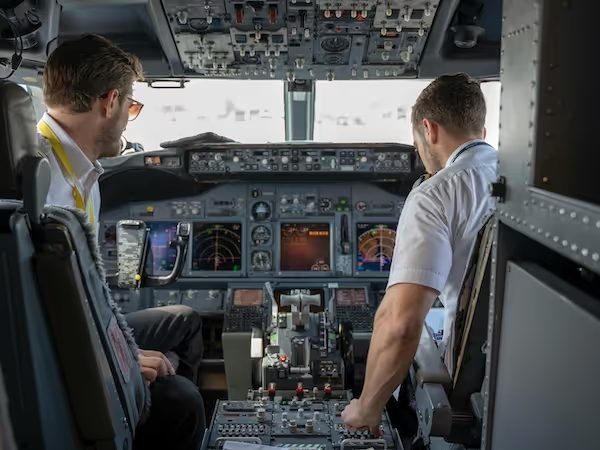
Cockpit facing cameras help monitor pilot workload, eye movement and scanning quality. AI models analyze pilot behavior to detect signs of distraction, fatigue or loss of visual scanning discipline. This information supports real-time alerts or post-flight debriefing. Monitoring workload helps prevent situational awareness degradation caused by fatigue or fixation.
Exterior Camera Interpretation
Exterior cameras provide additional visibility outside the cockpit, especially during low visibility flights. AI models detect other aircraft, terrain, obstacles and ground vehicles. By interpreting camera feeds continuously, AI provides a stable awareness layer that does not degrade under stress. Exterior camera analysis supports safe maneuvering and improves hazard detection.
Enhancing Air Traffic Control Situational Awareness
Situational awareness is equally important for air traffic controllers who manage high density airspace and coordinate aircraft movements. Real-time analytics and computer vision tools support controllers by organizing information, detecting anomalies and identifying potential conflicts. The Flight Safety Foundation at https://flightsafety.org has documented multiple cases where enhanced ATC situational awareness could have prevented loss of separation or runway incursions. AI tools strengthen ATC performance and reduce error likelihood.
Traffic Visualization and Conflict Detection
Computer vision and analytics tools visualize aircraft positions, flight paths and separation distances. They identify potential conflicts earlier than traditional displays. Controllers can view developing problems and take action before they escalate. Advanced visualization improves awareness during peak traffic hours.
Weather Visualization for Controllers
Real-time weather visualization helps controllers anticipate turbulence, wind shifts, storm cells or icing conditions affecting flight paths. Analytics systems predict storm movement and suggest alternative routes. Better weather awareness improves communication between controllers and pilots and enhances operational efficiency.
Using Annotated Datasets to Improve Situational Awareness Systems
Annotated datasets are essential for training AI tools that support situational awareness. These datasets include labeled examples of cockpit indicators, external hazards, weather patterns and traffic interactions. High quality labeling ensures that models learn relevant cues accurately.
Labeling Cockpit Indicators and Alerts
Cockpit indicators such as altitude, heading, speed and engine readings must be labeled precisely. These annotations help models understand instrument transitions, detect inconsistencies and alert pilots when values deviate unexpectedly. Accurate annotation supports stable and reliable cockpit analytics.
Labeling Visual Hazards
Visual hazard labeling includes identifying other aircraft, vehicles, wildlife, equipment and terrain. These labels help models recognize patterns that humans depend on during flight. High resolution annotation improves detection accuracy and supports safer runway operations.
Scenario Level Annotation
Scenarios such as approach, takeoff or taxi sequences must be labeled with phase-specific information. Scenario level annotation helps models interpret context and anticipate changes. Models learn which cues matter most during different flight phases, enhancing situational awareness.
Challenges in Improving Situational Awareness Through AI
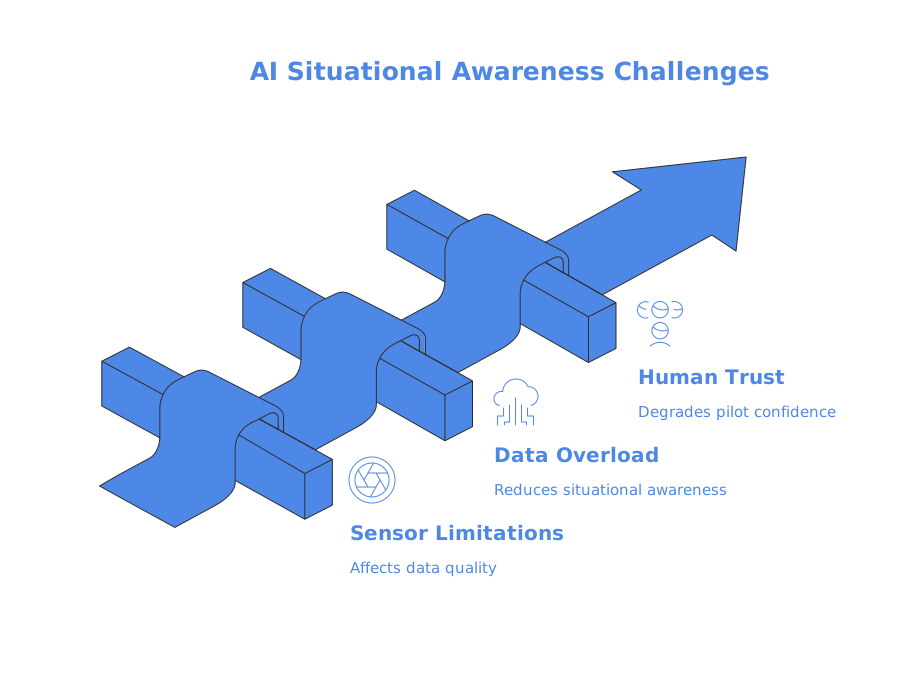
AI based situational awareness systems face significant challenges that influence their effectiveness. Understanding these challenges helps designers develop more reliable tools and datasets.
Sensor Limitations
Instruments and cameras may produce noise or distortions that affect data quality. Sensor limitations complicate AI interpretation and reduce situational awareness reliability. Systems must account for sensor variability and environmental conditions.
Data Overload
AI tools must provide useful information without overwhelming pilots or controllers. Too much information reduces situational awareness rather than improving it. Designers must prioritize clarity and relevance in AI alerts.
Human Trust and Interaction
Pilots must trust AI tools without becoming dependent on them. If pilots misunderstand AI behavior, situational awareness can degrade. Systems must be transparent and intuitive to support pilot confidence.
Integrating Computer Vision and Analytics into Aviation Workflows
Computer vision and real-time analytics must integrate smoothly into existing aviation workflows. Effective integration improves safety while preserving operational efficiency.
Integration with Training Programs
Training programs can use AI insights to help pilots improve scanning, workload management and interpretation skills. Simulators that incorporate real-time analytics provide more realistic and actionable feedback. Training becomes more adaptive and personalized.
Integration with Flight Operations
Flight operations benefit from AI tools that monitor performance and highlight trends. These systems support decision making during normal and abnormal situations. Seamless integration reduces friction and enhances safety.
Integration with Safety Management Systems
Airlines use AI enhanced situational awareness tools to identify risks earlier and correct systemic issues. These tools provide valuable insights that support continuous safety improvement.
Supporting Your Aviation Situational Awareness Projects
If you are building situational awareness tools or developing aviation datasets for analysis and real-time hazard detection, we can help you design structured annotation workflows, create high quality labeled data and integrate sensor information across complex aviation environments. Our teams specialize in cockpit analytics, runway hazard detection and annotated scenario datasets that improve aviation safety. If you want assistance with your next aviation dataset, feel free to reach out anytime.
What is Improving situational awareness in aviation with computer vision and Real-Time analytics?
Situational awareness determines how effectively pilots and air traffic controllers perceive, interpret and anticipate changing flight conditions. New advancements in computer vision and real-time analytics are transforming how aviation professionals maintain high situational awareness in complex, high workload environments.
What does the article explain about why situational awareness needs technological reinforcement?
Situational awareness has always been central to aviation safety, but modern airspace complexity and evolving cockpit technology create new challenges for pilots and controllers. The European Union Aviation Safety Agency highlights that incidents involving reduced situational awareness often occur during high workload phases such as approach, landing or unexpected deviations.
What does the article explain about how computer vision strengthens aviation situational awareness?
Computer vision systems analyze visual information from cockpit cameras, exterior sensors and airport monitoring systems. They help detect obstacles, identify landmarks, monitor weather changes and highlight visual cues that humans may miss. According to Eurocontrol, visual misinterpretation remains a significant contributing factor in runway incursions and approach instability.
How can teams ensure quality in Improving situational awareness in aviation with computer vision and Real-Time analytics?
Situational awareness is equally important for air traffic controllers who manage high density airspace and coordinate aircraft movements. Real-time analytics and computer vision tools support controllers by organizing information, detecting anomalies and identifying potential conflicts. AI tools strengthen ATC performance and reduce error likelihood.
What are the main challenges of Improving situational awareness in aviation with computer vision and Real-Time analytics?
AI based situational awareness systems face significant challenges that influence their effectiveness. Understanding these challenges helps designers develop more reliable tools and datasets. Instruments and cameras may produce noise or distortions that affect data quality.
What is involved in integrating computer vision and analytics into aviation workflows?
Computer vision and real-time analytics must integrate smoothly into existing aviation workflows. Effective integration improves safety while preserving operational efficiency. Training programs can use AI insights to help pilots improve scanning, workload management and interpretation skills.