Situational Awareness in Aviation: Definition, Measurement and AI Applications
.jpeg)
Situational awareness is one of the most critical components of aviation safety because pilots, controllers and onboard systems depend on an accurate understanding of what is happening around them. It determines how pilots perceive environmental cues, interpret hazards, anticipate risks and make timely decisions in both normal and abnormal situations. This article explains how situational awareness is defined in aviation, how it is measured using operational, behavioral and cognitive methods, and how it can be improved through training, automation and computer vision systems. It also describes recent developments in AI based situational awareness, including real time image analysis, sensor fusion and anomaly detection. The article concludes with practical insight into how annotated datasets support next generation situational awareness systems for aircraft, airports and aviation safety organizations.
- Situational awareness is one of the most critical components of aviation safety because pilots, controllers and onboard systems depend on an accurate understanding of what is happening around them.
- It determines how pilots perceive environmental cues, interpret hazards, anticipate risks and make timely decisions in both normal and abnormal situations.
- This article explains how situational awareness is defined in aviation, how it is measured using operational, behavioral and cognitive methods, and how it can be improved through training, automation and computer vision systems.
- The article concludes with practical insight into how annotated datasets support next generation situational awareness systems for aircraft, airports and aviation safety organizations.
Understanding Situational Awareness in Aviation
Situational awareness describes a pilot’s ability to perceive the environment, understand what the information means and anticipate how conditions may evolve. Aviation safety organizations such as ICAO define situational awareness as the continuous extraction of environmental information and the projection of future states. It helps pilots maintain control during complex flight conditions, respond to unexpected events and avoid hazardous situations. Situational awareness also applies to air traffic controllers, maintenance teams and onboard flight systems. When situational awareness is strong, pilots detect changes quickly and respond appropriately. When it declines, the risk of operational errors increases.
What Situational Awareness Means in Practice
In practical terms, situational awareness involves interpreting flight instruments, observing surrounding aircraft, monitoring weather and coordinating with air traffic control. Pilots must combine visual cues with instrument data to construct a real time mental model of the flight environment. Skybrary notes that many aviation incidents involve a loss of situational awareness due to distraction, information overload or unexpected hazards. Pilots rely on training and procedural discipline to maintain strong awareness during dynamic flight operations. They must remain alert, avoid tunnel vision and continuously update their mental model based on new information.
Perception of Key Cues
Pilots first need to perceive essential cues such as altitude, airspeed, heading, position and weather conditions. Perception forms the foundation of situational awareness because all later decisions depend on accurate sensing. Pilots must scan instruments and external surroundings in a structured way to avoid missing critical information. Effective perception requires good visibility, reliable displays and strong scanning techniques.
Understanding Operational Meaning
Understanding involves interpreting what perceived cues indicate about the aircraft’s current state. Pilots must recognize whether weather changes threaten stability or whether unusual indications suggest a system malfunction. Understanding also includes integrating information from multiple sources to evaluate overall safety. Clear mental models help pilots make sound judgments under pressure.
Anticipation of Future Conditions
Anticipation refers to predicting how situations may change in the next few seconds or minutes. Pilots must anticipate potential hazards such as wake turbulence, storm cells or conflicting traffic. Anticipation improves reaction time and prevents tactical surprises. Strong situational awareness allows pilots to remain ahead of the aircraft rather than reacting late.
How Situational Awareness Is Measured in Aviation
Measuring situational awareness helps evaluate pilot performance, training effectiveness and operational safety. The FAA emphasizes that situational awareness cannot be measured directly but must be assessed through observable behaviors, cognitive indicators and task performance. Aviation researchers use multiple methods to estimate situational awareness levels during training, simulations or real operations.
Performance Based Measurement
Performance based measurement evaluates how well pilots detect hazards, respond to changes and maintain control. Instructors assess the accuracy and timeliness of pilot decisions during simulated scenarios. Strong performance indicates high situational awareness, especially when conditions become challenging. Performance based methods provide practical insight into operational capability.
Behavioral Observation
Behavioral observation focuses on how pilots scan, communicate and manage workload. Observers monitor whether pilots maintain consistent scanning patterns or whether they fixate on a single instrument. Behavioral clues reveal how focused, overloaded or distracted a pilot may be. Observation also helps identify procedural lapses that reduce situational awareness.
Cognitive Assessment
Cognitive assessment estimates how well pilots understand the environment and anticipate future events. This includes evaluating decision making, mental workload and interpretation accuracy. Cognitive measurement helps identify the root causes of situational awareness lapses. For example, misunderstanding a system alert may indicate cognitive overload rather than poor perception.
Factors That Influence Situational Awareness
Situational awareness depends on multiple environmental, psychological and operational factors. These influences interact and can either strengthen or degrade awareness. Understanding these factors helps organizations improve training and cockpit design.
Environmental Complexity
Weather, traffic density and terrain complexity all affect situational awareness. Low visibility, turbulence or multiple conflicting aircraft increase cognitive load. Pilots must process more information and maintain accuracy under stress. Environmental complexity requires stronger focus and more disciplined scanning.
Automation and System Behavior
Automation helps reduce workload but can also degrade situational awareness if pilots lose touch with system status. Confusion about automation modes or unexpected behavior can create hazards. The MITRE Aviation Safety Center highlights automation surprise as a major contributor to situational awareness loss. Pilots must maintain awareness of what automation is doing and why.
Human Factors and Workload
Fatigue, distraction, stress and time pressure reduce situational awareness. Pilots must manage workload effectively and use crew resource management to distribute cognitive tasks. High workload reduces the ability to perceive or interpret information accurately. Training programs emphasize strategies to maintain awareness under high workload conditions.
Improving Situational Awareness in Aviation
Improving situational awareness requires better training, more effective cockpit design and advanced sensing systems. Pilots learn to refine scanning techniques, manage workload and interpret complex data accurately. Organizations improve situational awareness by optimizing procedures, displays and teamwork.
Enhanced Training Programs
Training programs teach pilots how to manage complexity, avoid fixation and maintain awareness during turbulence or emergencies. Scenario based training helps pilots recognize developing hazards and respond proactively. High fidelity simulators expose pilots to rare events that require fast awareness recovery. Continuous training builds confidence and sharpens decision making.
Improved Human Machine Interfaces
Cockpit displays and alerting systems influence how pilots interpret information. Well designed interfaces reduce confusion and highlight critical cues. Color coding, simplified layouts and predictive indicators help pilots maintain situational awareness. Optimized displays support clearer perception and interpretation.
Team Communication and Coordination
Crew resource management improves communication and reduces mental workload. Pilots share information, cross check interpretations and coordinate actions to maintain shared situational awareness. Clear communication reduces the risk of misinterpretation and strengthens collective decision making.
AI Driven Situational Awareness Systems
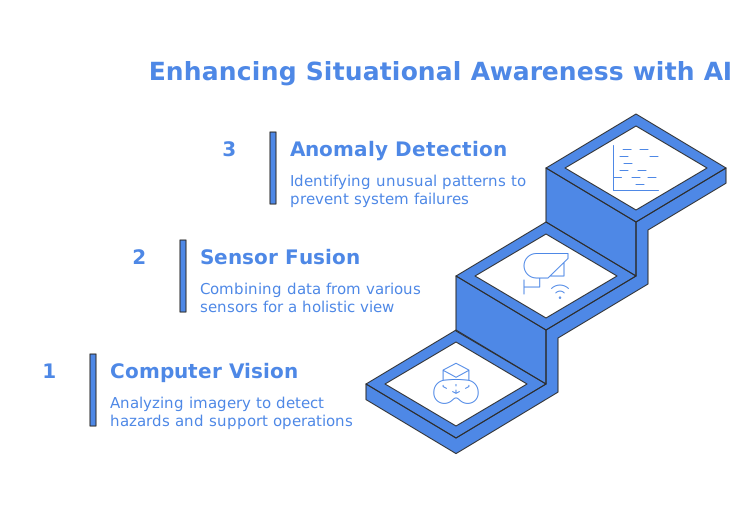
AI systems enhance situational awareness by analyzing large volumes of data and providing real time predictions. NASA’s aeronautics research investigates how AI interprets sensor data to identify hazards earlier and reduce pilot workload. AI based systems monitor instruments, detect anomalies and suggest corrective actions. These systems augment pilot awareness and add redundancy to safety operations.
Computer Vision for Cockpit and Exterior Awareness
Computer vision systems analyze imagery from cockpit cameras, exterior sensors and airport monitoring equipment. They help detect runway incursions, weather hazards or external damage. Vision models support pilots during low visibility operations and assist ground personnel with aircraft inspection. Annotated datasets help these models recognize visual patterns reliably.
Sensor Fusion for Predictive Awareness
Sensor fusion combines radar, GPS, LiDAR and camera data to provide a holistic view of the environment. Fused data helps systems interpret aircraft position, weather conditions and potential conflicts more accurately. Predictive algorithms forecast changes in wind, traffic or terrain. Sensor fusion enhances anticipatory awareness and supports safer decision making.
Anomaly Detection for System Health
AI systems monitor engine data, control inputs and system behavior to detect anomalies early. Identifying unusual patterns helps prevent system failures that can degrade situational awareness. Anomaly detection provides pilots with clear alerts about emerging risks. This strengthens safety margins during flight.
Annotated Datasets for Situational Awareness AI
Annotated datasets are essential for training situational awareness models. They provide labeled examples of hazards, instrument changes, visual cues and operational scenarios. High quality labeling helps models learn to interpret flight information accurately. Datasets must be diverse, consistent and aligned with real world flight conditions.
Visual Cue Annotation
Visual cue annotation includes labeling runway markings, aircraft positions, weather features and instrument transitions. Annotators help models identify patterns that humans use to build situational awareness. Visual labels support tasks such as runway monitoring and external hazard detection.
Instrument and Alert Annotation
Instrument and alert data must be labeled to help models understand system behavior. Annotators label changes in altitude, speed, temperature and pressure. Clear labeling supports anomaly detection and alert prioritization. These annotations improve cockpit situational awareness tools.
Scenario Level Annotation
Situational awareness depends on recognizing multi step events rather than isolated cues. Scenario annotation labels entire sequences such as approach procedures, takeoff phases or conflict resolution. Models trained on scenario level data better understand operational context. This helps predict future states and improve anticipatory awareness.
Challenges in Building Situational Awareness Datasets
Creating situational awareness datasets involves significant complexity. Flight environments vary widely, and labeling requires domain expertise. Multiple challenges influence dataset quality and model performance.
Complexity of Multi Sensor Data
Flight data comes from radar, cameras, GPS and cockpit instruments. Aligning these sources is difficult but essential for accurate annotation. Misalignment reduces model performance and introduces errors. Preprocessing must ensure temporal and spatial synchronization.
Need for Expert Knowledge
Annotating flight scenarios requires aviation expertise. Annotators must understand procedures, alerts and system behavior to label scenes correctly. Expert review improves dataset accuracy but increases cost and complexity. High fidelity datasets depend on expert involvement.
Environmental Variability
Weather, lighting and terrain change constantly during flight. Datasets must include enough variability to support generalization. This requires large scale collection across multiple flights, seasons and aircraft types. Diverse datasets prevent overfitting and ensure reliability.
How Situational Awareness Integrates into Aviation Safety
Situational awareness underpins all aspects of aviation safety. It influences piloting decisions, system behavior and air traffic control operations. Enhanced situational awareness reduces risks and improves operational efficiency.
Integration with Pilot Decision Making
Models that support situational awareness help pilots detect hazards early, respond faster and maintain control during emergencies. They augment human perception and reduce mental workload. Better decision making improves safety margins.
Integration with Air Traffic Management
Situational awareness also supports controllers who manage complex airspace systems. AI tools help identify conflicts, track aircraft and predict potential risks. Improved awareness enhances coordination between pilots and controllers. It strengthens overall traffic flow management.
Integration with Safety Monitoring Systems
Airlines use situational awareness tools to monitor fleet performance, detect anomalies and prevent incidents. Annotated datasets help build systems that identify operational risks early. These systems contribute to safety culture and continuous improvement.
Supporting Your Aviation Safety and Awareness AI Projects
If you are developing situational awareness datasets or designing AI tools for aviation safety, we can help you build high quality annotation pipelines, create structured labels and integrate multi sensor data. Our teams specialize in labeling complex flight scenarios, visual cues and instrument behavior for advanced situational awareness models. If you need support with your next dataset or safety system, feel free to reach out anytime.
What is Situational awareness in aviation?
Situational awareness is one of the most critical components of aviation safety because pilots, controllers and onboard systems depend on an accurate understanding of what is happening around them. It determines how pilots perceive environmental cues, interpret hazards, anticipate risks and make timely decisions in both normal and abnormal situations.
What does the section on “Understanding situational awareness in aviation” explain?
Situational awareness describes a pilot’s ability to perceive the environment, understand what the information means and anticipate how conditions may evolve. Aviation safety organizations such as ICAO define situational awareness as the continuous extraction of environmental information and the projection of future states.
What does the article explain about what situational awareness means in practice?
In practical terms, situational awareness involves interpreting flight instruments, observing surrounding aircraft, monitoring weather and coordinating with air traffic control. Pilots must combine visual cues with instrument data to construct a real time mental model of the flight environment.
What does the article explain about how situational awareness is measured in aviation?
Measuring situational awareness helps evaluate pilot performance, training effectiveness and operational safety. The FAA emphasizes that situational awareness cannot be measured directly but must be assessed through observable behaviors, cognitive indicators and task performance. Aviation researchers use multiple methods to estimate situational awareness levels during training, simulations or real operations.
What does the section on “Factors that influence situational awareness” explain?
Situational awareness depends on multiple environmental, psychological and operational factors. These influences interact and can either strengthen or degrade awareness. Understanding these factors helps organizations improve training and cockpit design.
What are the main challenges of Situational awareness in aviation?
Flight environments vary widely, and labeling requires domain expertise. Multiple challenges influence dataset quality and model performance. Flight data comes from radar, cameras, GPS and cockpit instruments.