Aircraft Surface Inspection Using Computer Vision: How AI Detects Damage, Defects and Irregularities
.jpeg)

Aircraft surface inspection is essential to flight safety because small defects can rapidly grow into serious structural problems if not detected early. Traditional inspections rely on visual assessment and manual procedures, which are time consuming and vulnerable to human error. Computer vision and AI powered techniques now allow operators to detect cracks, dents, corrosion spots and composite delamination with greater speed and precision. This article explains how aircraft surfaces are inspected, how computer vision improves detection accuracy, how annotated datasets support model training and which challenges arise from lighting, shadows and surface variability. It also explores integration with maintenance workflows and future applications in predictive airworthiness monitoring.
- Aircraft surface inspection is essential to flight safety because small defects can rapidly grow into serious structural problems if not detected early.
- Traditional inspections rely on visual assessment and manual procedures, which are time consuming and vulnerable to human error.
- Computer vision and AI powered techniques now allow operators to detect cracks, dents, corrosion spots and composite delamination with greater speed and precision.
- This article explains how aircraft surfaces are inspected, how computer vision improves detection accuracy, how annotated datasets support model training and which challenges arise from lighting, shadows and surface variability.
Why Aircraft Surface Inspection Matters
Aircraft surfaces undergo continuous stress from pressurization cycles, temperature changes, weather exposure and mechanical loads. The European Union Aviation Safety Agency requires regular inspections to detect developing defects before they compromise structural integrity. Dents, scratches, cracks and impact damage can grow quickly during high altitude operations. If undetected, these defects may weaken structural materials or affect aerodynamic performance. Surface inspection ensures reliability across the aircraft lifecycle, from routine transit checks to deep heavy maintenance cycles. Accurate inspection improves fleet availability and reduces long term repair costs.
Traditional Surface Inspection Methods
Traditional inspection depends on manual scanning conducted by trained technicians using flashlights, ladders, borescopes or mirrors. Inspectors follow structured checklists and verify specific structural regions repeatedly. The Federal Aviation Administration emphasizes that manual inspection remains effective but is limited by human factors such as fatigue, distraction or visibility constraints. Manual assessments take time and require favorable lighting conditions to identify small irregularities. While essential, these procedures cannot guarantee perfect consistency across inspectors or shifts. The growing complexity of aircraft materials increases the need for more advanced tools.
Visual Inspection Limitations
Technicians may overlook defects due to low contrast, shadows or surface reflections. High workload and time pressure also affect inspection quality. Small cracks or pits may blend with paint patterns or dirt deposits, making detection difficult.
Equipment Limitations
Tools such as borescopes provide detailed views but require manual manipulation. Accessing hard to reach areas is labor intensive. Some materials require specialized lighting or angles to reveal defects.
Variability Between Inspectors
Different inspectors may interpret similar defects differently. Experience level, fatigue and environmental conditions influence inspection accuracy. Variability increases the risk of inconsistent detection.
How Computer Vision Enhances Aircraft Surface Inspection
Computer vision systems analyze images or video to detect irregularities with high precision. These systems rely on AI models trained to interpret surface patterns, identify structural inconsistencies and highlight anomalies. The NASA composites research program shows how imaging systems detect composite delamination and fiber distortion effectively. Computer vision provides consistent, scalable inspection capabilities that complement manual procedures. It is particularly effective in detecting early defects invisible to the naked eye.
DataVLab’s image annotation services can label cracks, corrosion, dents, and other surface defects for these inspection models.
Consistent High Resolution Analysis
Computer vision analyzes high resolution images under controlled lighting to detect small changes in texture, shape or reflectivity. AI models identify defects that may appear subtle but indicate underlying structural issues.
Automated Defect Detection
AI can detect dents, cracks, corrosion spots or paint damage in real time. Automated detection systems highlight anomalies for technician review, reducing oversight risk. This improves accuracy and shortens inspection times.
Better Coverage Across Surface Areas
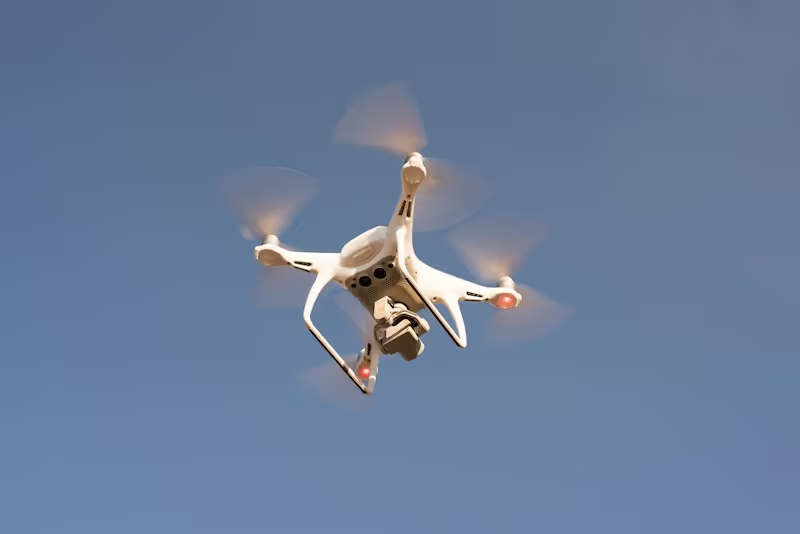
Drones, robotic platforms and fixed camera systems provide broad coverage of hard to reach aircraft regions. Computer vision ensures even lighting and consistent scanning patterns.
Types of Defects Computer Vision Can Detect
Computer vision systems detect a wide variety of surface abnormalities across both metal and composite materials. These systems analyze geometry, texture, edges and color changes to identify defects.
Cracks and Surface Fractures
Cracks develop due to mechanical fatigue, thermal cycling or manufacturing imperfections. AI models detect crack patterns based on edge discontinuities and shape irregularities. Crack detection is critical to identifying early structural issues.
Dents and Impact Marks
Impacts from ground equipment, birds or runway debris create dents. Automated systems detect depth variations and shadows caused by deformation. Dents may indicate hidden internal damage requiring further inspection.
Corrosion and Oxidation
Corrosion appears as discoloration, roughness or pitting on metal surfaces. AI models detect texture changes associated with corrosion onset. Early detection prevents deeper structural degradation.
Composite Delamination
Composite aircraft skins may experience delamination, fiber breakage or resin separation. Computer vision identifies patterns indicating material separation, supported by thermal and ultrasonic data when required.
Data Collection for Aircraft Surface Inspection
Collecting high quality image data is essential for building reliable inspection systems. Image collection must capture surface variations, lighting differences and defect types accurately.
Drone Based Image Capture
Drones provide flexible coverage of aircraft exteriors, especially large fleet aircraft. They capture high resolution images from consistent angles and distances. Drone capture reduces the need for scaffolding or ladders.
Ground Based Camera Systems
Mobile ground robots or handheld devices capture close range images with controlled lighting. These systems provide accurate views of areas prone to damage such as leading edges, wing roots or landing gear assemblies.
Multi Spectral Imaging
Some defects require multi spectral imaging such as infrared or ultraviolet to reveal hidden anomalies. These techniques highlight sub surface defects or early stage corrosion not visible in normal light.
Preprocessing Steps for Surface Inspection Imagery
Preprocessing prepares image data for accurate detection. Aircraft surfaces vary in reflectivity, color and geometry, making preprocessing essential.
Lighting Normalization
Aircraft exteriors reflect sunlight, producing glare that interferes with detection. Lighting normalization removes excessive brightness and improves surface visibility. Normalized lighting ensures consistent analysis.
Noise Reduction
Reflections, shadows or minor artifacts introduce noise. Noise reduction techniques such as smoothing filters improve feature visibility without removing essential details.
Geometric Alignment
Images must align correctly across sequences to ensure accurate comparison. Alignment supports detection of structural changes across multiple inspections.
Annotation Methods for Aircraft Surface Datasets
High quality datasets require precise annotation across multiple defect types and surface conditions. Annotators label cracks, dents, corrosion patterns and paint irregularities.
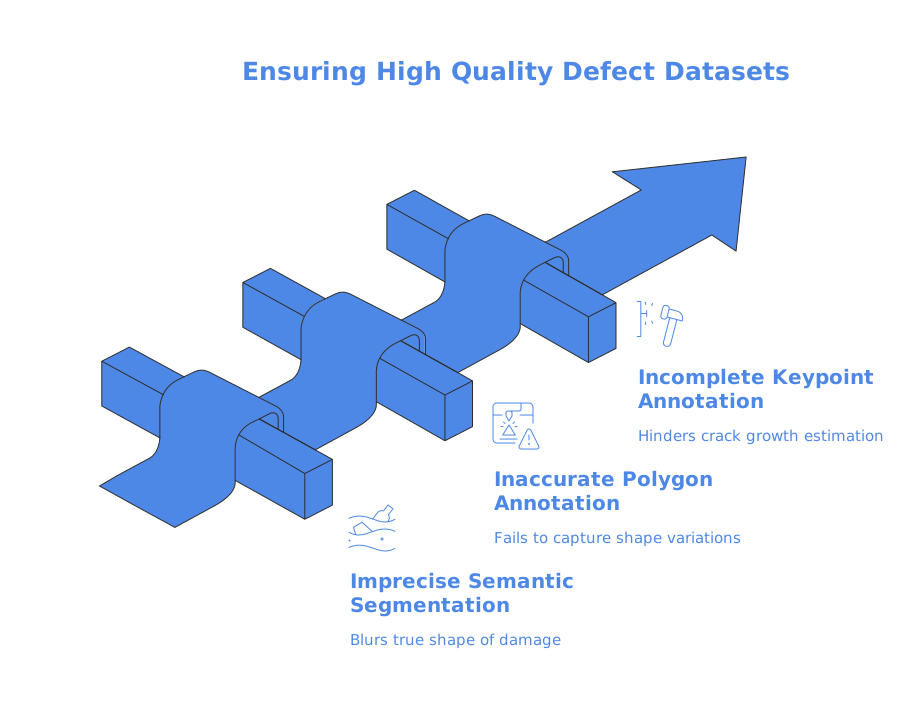
Semantic Segmentation for Defect Regions
Segmenting defect areas provides pixel accurate boundaries around damage. This helps models learn the true shape and extent of surface abnormalities.
Polygon Annotation for Irregular Shapes
Defects such as corrosion or paint peeling have irregular boundaries. Polygon annotation captures these variations accurately, providing detailed shape representation.
Keypoint Annotation for Crack Growth
Keypoints mark critical points along a crack path. These labels help models estimate crack length, direction and propagation characteristics.
Quality Control in Surface Inspection Datasets
Quality control ensures annotation accuracy and dataset consistency across thousands of images. Inspection accuracy depends on precise labeling.
Multi Layer Review
Reviewers evaluate annotations for boundary accuracy, class consistency and clarity. Multi layer review catches errors early and ensures reliable dataset performance.
Defect Validation by Experts
Experienced aircraft maintenance engineers evaluate challenging cases. Expert validation ensures that datasets reflect real world inspection standards and regulatory requirements.
Automated Consistency Checks
AI tools verify annotation quality by analyzing class balance, shape coherence and boundary patterns. Automated checks accelerate dataset validation.
Challenges in AI Based Surface Inspection
Despite benefits, AI systems face challenges tied to environmental conditions, material properties and visual variability.
Reflective Surfaces
Aircraft paint and metal surfaces reflect light strongly, introducing glare. Vision models must learn to handle reflectivity variation and avoid misclassifying reflections as defects.
Surface Variability
Aircraft surfaces vary in color, texture and curvature. Models require diverse datasets to generalize across fleets and manufacturers.
Shadow Interference
Shadows cast by wings, landing gear or equipment obscure defects. Models must learn shadow invariance to maintain detection accuracy.
Integrating Computer Vision into Aircraft Maintenance
Integration with maintenance workflows ensures that computer vision tools provide actionable value.
Integration with MRO Systems
Maintenance teams use AI generated defect maps to plan repair schedules. Integration shortens inspection cycles and reduces downtime.
Integration with Airworthiness Documentation
Automated inspection outputs support airworthiness documentation required by regulators. This improves reporting accuracy and speeds compliance procedures.
Integration with Predictive Maintenance
Surface inspection data supports predictive maintenance strategies by identifying early defects before they propagate. AI tools correlate surface condition data with operational stress patterns.
Supporting Your Aircraft Inspection and Safety AI Projects
If you are building surface inspection tools or designing datasets for aircraft damage detection, we can help you develop high quality annotation workflows, collect multi spectral images and integrate AI models into aviation maintenance processes. Our teams specialize in surface defect datasets, segmentation workflows and inspection automation for airworthiness programs. If you want guidance for your next aviation inspection dataset, feel free to reach out anytime.
How does AI detect Damage, defects and irregularities?
Aircraft surface inspection is essential to flight safety because small defects can rapidly grow into serious structural problems if not detected early. Traditional inspections rely on visual assessment and manual procedures, which are time consuming and vulnerable to human error.
Why does aircraft surface inspection matter?
Aircraft surfaces undergo continuous stress from pressurization cycles, temperature changes, weather exposure and mechanical loads. The European Union Aviation Safety Agency requires regular inspections to detect developing defects before they compromise structural integrity. Dents, scratches, cracks and impact damage can grow quickly during high altitude operations.
What does the article explain about how computer vision enhances aircraft surface inspection?
Computer vision systems analyze images or video to detect irregularities with high precision. These systems rely on AI models trained to interpret surface patterns, identify structural inconsistencies and highlight anomalies. The NASA composites research program shows how imaging systems detect composite delamination and fiber distortion effectively.
How does Aircraft surface inspection using computer vision work in practice?
Aircraft surfaces vary in reflectivity, color and geometry, making preprocessing essential. Aircraft exteriors reflect sunlight, producing glare that interferes with detection. Lighting normalization removes excessive brightness and improves surface visibility.
How can teams ensure quality in Aircraft surface inspection using computer vision?
Quality control ensures annotation accuracy and dataset consistency across thousands of images. Reviewers evaluate annotations for boundary accuracy, class consistency and clarity. Multi layer review catches errors early and ensures reliable dataset performance.
What are the main challenges of Aircraft surface inspection using computer vision?
Despite benefits, AI systems face challenges tied to environmental conditions, material properties and visual variability. Aircraft paint and metal surfaces reflect light strongly, introducing glare. Vision models must learn to handle reflectivity variation and avoid misclassifying reflections as defects.