Foreign Object Damage in Aviation: Causes, Risks and How AI Prevents Aircraft Damage
.jpeg)
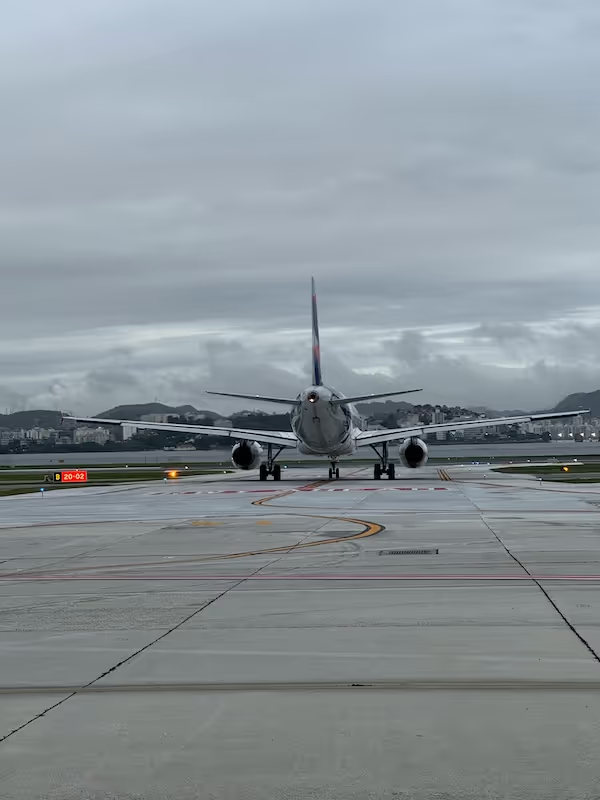
Foreign Object Damage is one of the most expensive and dangerous threats to aircraft operations, responsible for costly repairs, flight delays and major safety risks. Damage can occur on runways, taxiways, aprons or maintenance areas where debris or environmental hazards contact aircraft components. This article explains how FOD damage occurs, which aircraft systems are most vulnerable and why traditional detection methods often miss critical debris. It also examines how AI powered tools, advanced computer vision systems and annotated datasets enhance early detection and prevent FOD related incidents. The article concludes with insights on integrating AI into airport workflows to improve reliability and reduce long term exposure to debris related risks.
- Foreign Object Damage is one of the most expensive and dangerous threats to aircraft operations, responsible for costly repairs, flight delays and major safety risks.
- Damage can occur on runways, taxiways, aprons or maintenance areas where debris or environmental hazards contact aircraft components.
- This article explains how FOD damage occurs, which aircraft systems are most vulnerable and why traditional detection methods often miss critical debris.
- The article concludes with insights on integrating AI into airport workflows to improve reliability and reduce long term exposure to debris related risks.
Understanding Foreign Object Damage in Aviation
Foreign Object Damage refers to the physical harm caused to aircraft by debris or objects that should not be present in operational zones. The National Transportation Safety Board reports that FOD damage contributes to aircraft accidents, aborted takeoffs and costly repair events each year. Damage may occur on the runway, apron, hangar areas or during engine operation. The term covers anything from small stones to metal fragments, misplaced tools or large construction materials. The unpredictable nature of debris makes FOD damage a persistent challenge for airports, airlines and maintenance crews.
Why FOD Damage Is a Persistent Safety Threat
The consequences of FOD damage depend on the size, material and location of the debris. The Transportation Safety Board of Canada highlights cases where even small objects caused significant engine damage or tire failures. Jet engines are particularly vulnerable because debris enters at high velocity, striking fan blades and internal components. FOD can also cause tire blowouts, structural punctures, brake failures and steering system damage. These risks place FOD damage among the most expensive avoidable hazards in aviation, both in operational costs and potential safety consequences.
Sources of FOD Damage
Debris originates from multiple sources such as aircraft parts, ground equipment, maintenance tools, cargo items, catering materials or weather induced displacement. Construction zones, ground vehicle activity and aircraft servicing areas all contribute to debris accumulation. Strong winds and jet blast often scatter small objects across critical zones. The variety of potential sources means airports must remain vigilant across all operational surfaces.
Types of Damage
FOD can cause surface scratches, dents, punctures or catastrophic internal engine failures. It may compromise landing gear, brake assemblies or aerodynamic surfaces. Minor damage often goes unreported but accumulates over time, while major incidents trigger immediate inspections and repairs. Damage severity depends on debris size, aircraft speed and the system involved.
How FOD Compromises Aircraft Safety
FOD affects safety by interfering with aircraft structure, propulsion and systems performance. The UK Air Accidents Investigation Branch has documented numerous incidents where debris triggered engine failures, leading to rejected takeoffs or emergency landings. Aircraft components, especially those exposed during taxi, takeoff or landing, face the highest risk of damage. Preventing these incidents requires accurate detection, rapid removal and consistent surface monitoring.
Engine Ingestion
Engine ingestion occurs when debris enters the engine intake. Fan blades strike debris at high rotational speeds, causing blade fractures, imbalance or complete failure. Even small objects may damage compressor stages or fuel systems. Engine ingestion is the most severe form of FOD damage because it affects flight-critical systems immediately.
Tire and Landing Gear Damage
Tires encounter debris during taxi, takeoff and landing. Sharp objects can puncture tires or weaken their structure, leading to blowouts at high speed. Landing gear assemblies also face risks from debris striking hydraulic lines, sensors or actuators. These failures compromise directional control and braking capability.
Surface and Structural Damage
Debris may strike the fuselage, wing leading edges or control surfaces. Even minor dents affect aerodynamics and can propagate into structural issues. Sharp objects may penetrate critical access panels or damage pitot tubes, affecting instrument accuracy. Surface damage often requires detailed inspection and repair.
Manual Detection and Its Limitations
Traditional FOD detection depends on regular inspections conducted by ground crews. These inspections involve visual scanning of runways, taxiways and aprons to identify debris. While effective to some extent, manual detection is limited by human fatigue, environmental conditions and the size of the inspection area. SAE International notes that manual inspection alone cannot ensure complete surface coverage, especially in large airports. Limited visibility during night operations or inclement weather further reduces effectiveness.
Inspection Time Constraints
Airports operate on tight schedules, limiting the time available for thorough inspections. Runways must reopen quickly, reducing the time inspectors have to identify debris. Time pressure increases the risk of missed objects.
Environmental Visibility Issues
Fog, rain or glare obstruct visibility. During low light conditions, even well trained inspectors may miss objects that blend with runway textures. Environmental limitations reduce the reliability of manual detection.
Inconsistent Human Scanning
Scanning patterns differ from person to person. Fatigue or distraction may cause inspectors to overlook small or partially hidden debris. Consistency is difficult to maintain over long shifts.
How AI Systems Reduce FOD Damage
Artificial intelligence strengthens FOD detection efforts by delivering continuous monitoring, high resolution analysis and automated alerts. AI systems examine camera streams, drone imagery or sensor outputs to detect and classify foreign objects. Embraer’s safety resources describe how AI tools help identify damage risks before they escalate into operational failures. Automated detection systems operate continuously, improving coverage across airport surfaces.
Faster Identification and Response
AI detects debris in real time and alerts ground personnel immediately. Faster detection reduces the time debris remains in critical zones. Rapid removal prevents damage during the next aircraft movement.
Higher Accuracy and Consistency
AI maintains consistent detection performance across all conditions. Unlike human inspectors, AI does not become fatigued or distracted. Models trained on diverse datasets detect small objects and subtle anomalies with higher precision.
Better Monitoring During Adverse Conditions
AI systems continue to operate during fog, rain or low visibility by relying on infrared sensors or enhanced imaging. This improves coverage when manual inspection is least effective.
Computer Vision for FOD Damage Prevention
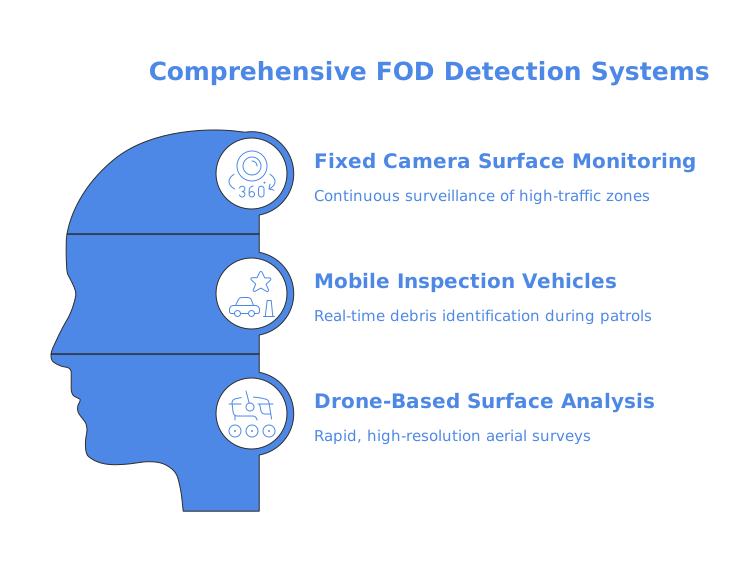
Computer vision models interpret visual data from cameras mounted along runways, on vehicles or aboard drones. These models detect non standard objects based on shape, color and texture. Vision systems analyze multiple frames to confirm object presence before issuing alerts. They support runway, taxiway and apron surveillance without requiring additional personnel.
Fixed Camera Surface Monitoring
Fixed cameras capture continuous images of airfield surfaces. AI models analyze these streams to detect irregularities or new objects. Airports use this method to monitor high traffic zones without closing runways.
Mobile Inspection Vehicles
Vehicles equipped with cameras and sensors scan surfaces during patrols. Computer vision analyzes video feeds in real time to identify debris. Mobile platforms combine flexible coverage with automated detection.
Drone Based Surface Analysis
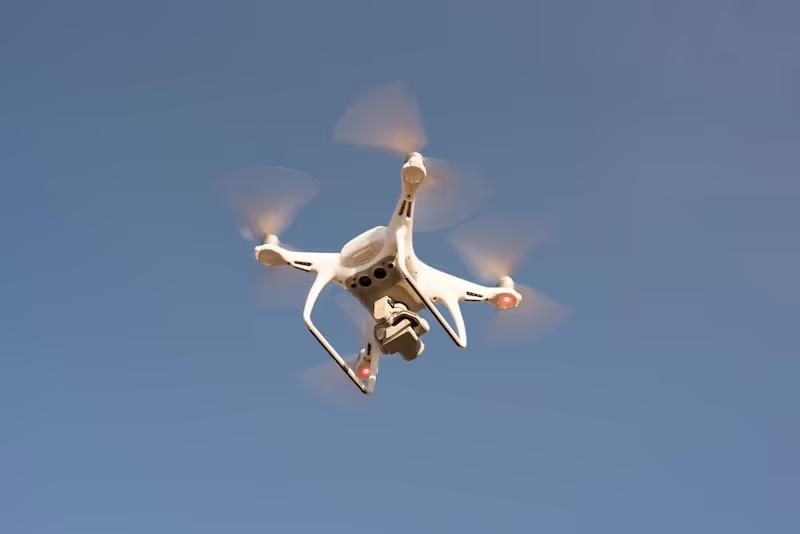
Drones survey large areas quickly with high resolution imagery. AI models detect debris from aerial views, even in areas difficult to reach on foot. Drone inspection is valuable after storms or construction activities.
Real-Time Analytics for Damage Risk Assessment
Real-time analytics evaluate environmental factors that influence FOD damage. By analyzing sensor data, weather conditions and traffic patterns, these systems predict where debris may accumulate. Analytics tools help prioritize inspection areas and improve response coordination.
Predictive Risk Scoring
Models assign risk scores to specific locations based on historical data, weather and operational activity. High risk zones receive more frequent inspection and camera coverage. Predictive scoring helps prevent damage through targeted monitoring.
Event Detection and Logging
Systems log detection events with timestamps and location data. This information supports safety investigations and long term improvement. Logs help identify chronic debris sources or procedural weaknesses.
Integration with Ramp and Runway Operations
Analytics integrate with airport operation centers to support decision making. When debris is detected, alerts include exact coordinates and visual evidence. Integration reduces communication delays and ensures faster resolution.
How Annotated Datasets Support FOD Damage Prevention
AI detection systems rely on annotated datasets containing images of debris across different environments. These datasets include labels for debris type, shape, lighting variations and surface textures. High quality annotation improves accuracy and reduces false positives.
Debris Category Annotation
Annotators classify debris by material, size and risk level. Detailed labeling helps models differentiate between critical hazards and harmless objects. Category annotation supports accurate classification.
Surface Texture Annotation
Runway surfaces vary based on paint, rubber deposits or wear. Annotators label these variations to help models learn background patterns. This reduces confusion between debris and surface artifacts.
Weather and Light Variation Annotation
Datasets must include scenes under various lighting and weather conditions. Annotators label environmental variations to help models generalize across operational scenarios. This strengthens reliability during adverse conditions.
Challenges in Building FOD Damage Prevention Systems
Despite strong benefits, FOD detection systems face several challenges. Understanding these difficulties helps improve system performance and integration.
Detecting Small and Irregular Objects
Small debris items are difficult to detect due to limited contrast or irregular shapes. Models require high resolution data and specialized training. Detection must also work under diverse visibility conditions.
Avoiding Excessive False Alerts
Too many false positives overwhelm maintenance teams. Systems must balance sensitivity with specificity. High false positive rates reduce trust and slow response.
Integrating with Airport Infrastructure
FOD systems must integrate with existing communication, operations and inspection workflows. Infrastructure differences between airports require adaptable system design.
Integrating AI Tools into Airport Safety Programs
Airports can integrate AI tools into safety programs through structured planning and collaboration between operations, maintenance and technology teams.
Integration with Maintenance Workflows
Maintenance teams benefit from early alerts and visual confirmation. AI tools support proactive cleanup and reduce the risk of damage. Integration ensures efficient coordination.
Integration into Safety Management Systems
FOD detection data enhances safety management systems by providing real time risk insights. Trends help identify procedural flaws, equipment issues or environmental factors that require intervention.
Integration with Digital Twin Models
Airports that use digital twins can incorporate FOD data to simulate and predict risk. This helps optimize inspection routines and long term infrastructure planning.
Supporting Your FOD Damage Prevention Projects
If you are building FOD damage detection systems or designing aviation safety datasets, we can help you create detailed annotation workflows, collect high quality imagery and train AI models for highly reliable detection. Our teams specialize in airport safety datasets that enhance FOD prevention and aircraft protection. If you want support for your next aviation safety project, feel free to reach out anytime.
What is Foreign object damage in aviation?
Foreign Object Damage is one of the most expensive and dangerous threats to aircraft operations, responsible for costly repairs, flight delays and major safety risks. Damage can occur on runways, taxiways, aprons or maintenance areas where debris or environmental hazards contact aircraft components.
What does the section on “Understanding foreign object damage in aviation” explain?
Foreign Object Damage refers to the physical harm caused to aircraft by debris or objects that should not be present in operational zones. The National Transportation Safety Board reports that FOD damage contributes to aircraft accidents, aborted takeoffs and costly repair events each year.
Why is FOD damage a persistent safety threat?
The consequences of FOD damage depend on the size, material and location of the debris. The Transportation Safety Board of Canada highlights cases where even small objects caused significant engine damage or tire failures. Jet engines are particularly vulnerable because debris enters at high velocity, striking fan blades and internal components.
What does the article explain about how FOD compromises aircraft safety?
FOD affects safety by interfering with aircraft structure, propulsion and systems performance. The UK Air Accidents Investigation Branch has documented numerous incidents where debris triggered engine failures, leading to rejected takeoffs or emergency landings. Aircraft components, especially those exposed during taxi, takeoff or landing, face the highest risk of damage.
What does the article explain about how AI systems reduce FOD damage?
Artificial intelligence strengthens FOD detection efforts by delivering continuous monitoring, high resolution analysis and automated alerts. AI systems examine camera streams, drone imagery or sensor outputs to detect and classify foreign objects. Embraer’s safety resources describe how AI tools help identify damage risks before they escalate into operational failures.
What does the article explain about how annotated datasets support FOD damage prevention?
AI detection systems rely on annotated datasets containing images of debris across different environments. These datasets include labels for debris type, shape, lighting variations and surface textures. High quality annotation improves accuracy and reduces false positives.