AI for Foreign Object Detection Using X-Ray Imaging: Enhancing Aviation Safety Through Advanced Screening
.jpeg)
Foreign object detection has traditionally focused on visual inspections and runway scans, but X-ray imaging introduces an additional layer of safety by revealing hidden or internal objects that cannot be detected by visible spectrum cameras. AI powered analysis of X-ray imagery strengthens detection accuracy, reduces false positives and improves maintenance efficiency in aviation environments. This article explains why X-ray imaging matters for FOD prevention, how AI models interpret these images, how datasets are labeled and what challenges arise when detecting small, complex or concealed debris. It also describes the integration of X-ray inspection systems into airport and maintenance workflows and highlights the role of annotated datasets in training reliable detection models.
- Foreign object detection has traditionally focused on visual inspections and runway scans, but X-ray imaging introduces an additional layer of safety by revealing hidden or internal objects that cannot be detected by visible spectrum cameras.
- AI powered analysis of X-ray imagery strengthens detection accuracy, reduces false positives and improves maintenance efficiency in aviation environments.
- This article explains why X-ray imaging matters for FOD prevention, how AI models interpret these images, how datasets are labeled and what challenges arise when detecting small, complex or concealed debris.
- It also describes the integration of X-ray inspection systems into airport and maintenance workflows and highlights the role of annotated datasets in training reliable detection models.
Why X-Ray Imaging Strengthens FOD Detection
X-ray imaging enhances safety by revealing debris or structural anomalies that are not visible on the surface. The Transportation Security Administration demonstrates how X-ray screening helps identify threats inside baggage or equipment by revealing density, material composition and internal features. In aviation, X-ray imaging plays a similar role by detecting debris trapped inside components, lodged in wheel assemblies or hidden within cargo containers. Airports and maintenance teams rely on X-ray tools to analyze parts that cannot be inspected visually. This adds a critical layer of protection, especially for debris that could cause damage during flight.
Understanding X-Ray Based Foreign Object Detection
X-ray detection works by scanning components, baggage or aircraft structures with high energy photons that reveal internal density variations. Foreign objects appear as distinct features because they differ in density and shape compared to the surrounding material. The National Institute of Standards and Technology provides guidelines for X-ray image analysis in industrial settings, emphasizing how density gradients and absorption patterns reveal non standard elements. In aviation, X-ray systems are used to inspect engines, wheels, cargo areas and critical systems. AI supports these inspections by interpreting X-ray patterns and identifying anomalies far more reliably than manual analysis alone.
Why Visual Methods Are Not Enough
Visible spectrum cameras detect external debris, but they cannot identify internal obstructions or objects hidden within structural cavities. X-ray imaging reveals debris deep inside components, enabling early intervention before the object becomes a hazard. This is especially important during overhaul, repair or heavy maintenance operations.
When X-Ray Imaging Is Most Useful
X-ray imaging is used when debris is suspected inside a part or when components are too complex for visual inspection. It helps detect trapped tools, manufacturing residues, loose fasteners or metal fragments that could compromise safety. It is also useful for inspecting cargo containers and ground equipment.
How AI Enhances X-Ray FOD Detection
AI algorithms analyze X-ray images to detect foreign objects with high accuracy. These models identify density anomalies, irregular shapes and unexpected patterns that indicate the presence of debris. The American Society for Nondestructive Testing emphasizes that AI has become essential to interpreting nondestructive testing data due to its ability to detect subtle inconsistencies. AI models analyze thousands of images rapidly, improving detection rates and reducing human workload. They can detect objects missed by manual inspection and provide consistent performance across conditions.
Pattern Recognition in X-Ray Images
X-ray images contain complex patterns caused by overlapping materials. AI models learn to distinguish between normal component structures and irregular density patterns that indicate debris. This improves detection accuracy and reduces false positives.
Material Classification
AI helps classify materials based on density signatures. Distinguishing metal from plastic or rubber improves debris identification. This helps maintenance teams assess risk and prioritize tasks based on material characteristics.
Shape and Edge Detection
AI models analyze shapes to identify foreign objects such as screws, wires, fragments or tools. Accurate shape recognition helps differentiate between normal internal structures and non standard objects.
Applications of X-Ray FOD Detection in Aviation
X-ray imaging supports multiple areas of aviation safety, from maintenance operations to cargo inspection. This broad applicability makes it a vital tool for reducing foreign object damage.
Aircraft Component Inspection
X-ray imaging supports detailed inspection of wheels, brakes, hydraulic systems and engine parts. Loose bolts, metal shavings or manufacturing debris become visible under X-ray analysis. AI models highlight irregular patterns that require closer investigation.
Cargo and Baggage Screening
X-ray imaging remains the primary tool for detecting prohibited items in cargo or baggage. AI supports screening by identifying objects that resemble dangerous or non compliant materials. This helps airports maintain regulatory compliance and prevent hazardous objects from entering airside zones.
Maintenance, Repair and Overhaul (MRO)
During heavy maintenance checks, components are X-rayed to identify trapped debris or internal damage. AI improves accuracy by interpreting subtle density variations that might indicate wear or metal fatigue. This reduces the likelihood of undetected defects.
Real-Time Analytics for X-Ray Detection
Real-time analytics help integrate X-ray data into aviation safety workflows. These tools analyze X-ray streams, highlight anomalies and provide immediate alerts to technicians.
Automated Alert Generation
Analytics systems identify potential foreign objects and notify inspectors instantly. This reduces review time and ensures that anomalies are not overlooked during manual analysis.
Data Fusion with Other Sensor Modalities
X-ray insights can be combined with visible light cameras, thermal sensors or ultrasonic data. Fusion improves accuracy by cross validating anomalies across multiple sources. This strengthens risk assessment significantly.
Inspection History Logging
X-ray inspections are logged with timestamps, component identifiers and risk classifications. This supports traceability and helps identify recurring issues that require systemic corrections.
Building Annotated X-Ray Datasets for FOD Detection
Annotated datasets are necessary for training accurate AI models. These datasets include X-ray images with labeled foreign objects, density anomalies and internal structures. Labeling must be precise because subtle differences in density patterns separate normal materials from hazardous debris.
Identifying Foreign Object Signatures
Annotators highlight regions that contain debris such as metal fragments, tools or packaging residues. These labels help models identify characteristic patterns across different materials.
Labeling Density Variations
X-ray images contain gradients caused by overlapping materials. Annotators must label density zones to help models understand normal patterns. This reduces false positives caused by structural complexity.
Material and Shape Annotation
Annotators label material types and object shapes to support classification tasks. These labels help AI models understand how objects differ in density and geometry. Consistent labeling improves reliability across multiple inspection scenarios.
Challenges in X-Ray Based FOD Detection
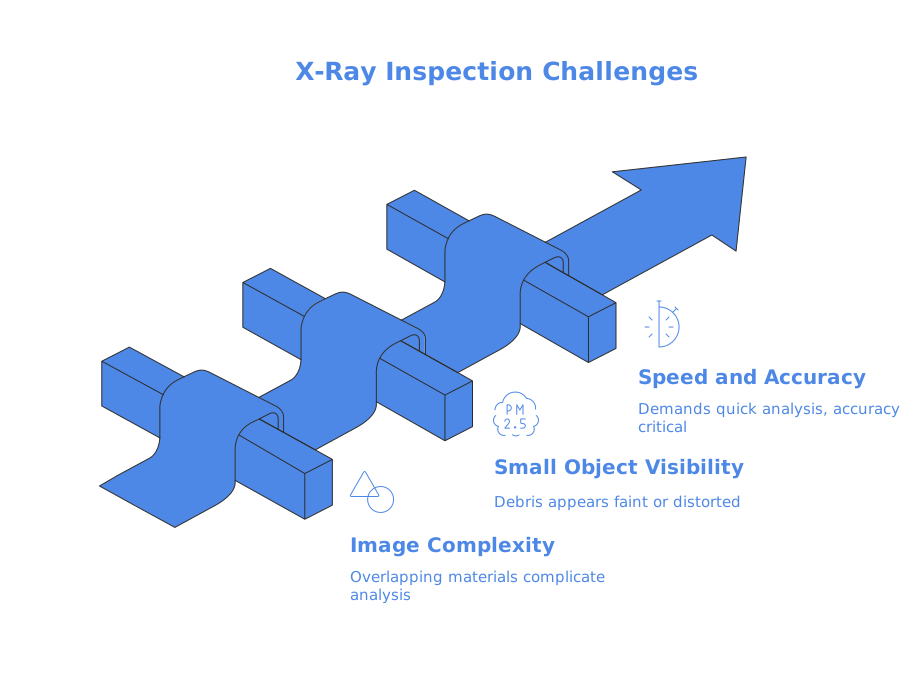
Despite its value, X-ray inspection faces several challenges that require careful dataset design and advanced modeling.
High Complexity of X-Ray Images
X-ray images contain overlapping materials that complicate interpretation. Models must learn to distinguish between normal internal features and foreign objects. This requires large, high quality datasets.
Small Object Visibility
Small debris items may appear faint or distorted. Detecting these requires high resolution imaging and specialized model training. Ensuring visibility across varying thickness levels is a key technical challenge.
Balancing Speed and Accuracy
Real-time inspection demands quick analysis, but accuracy remains critical. Systems must process X-ray images rapidly without sacrificing precision. Balancing these requirements influences system design.
Integrating X-Ray AI into Aviation Workflows
Successful adoption of X-ray AI tools requires thoughtful integration into existing maintenance and operational procedures.
Integration with MRO Processes
AI systems must align with established maintenance workflows. Technicians need clear alerts, visual overlays and diagnostic information that supports decision making. Integration reduces analysis time and enhances reliability.
Integration with Airport Security Systems
Cargo and baggage screening systems benefit from AI generated risk scores and automated alerts. Integration helps prioritize inspections and reduces backlogs during high traffic periods.
Integration with Safety Management Systems
X-ray detection insights enhance safety programs by identifying foreign object trends. Data helps airports identify procedural issues and improve long term risk management.
Supporting Your Aviation X-Ray and Safety AI Projects
If you are developing X-ray detection tools or building aviation safety datasets, we can help you design structured annotation workflows, prepare high quality datasets and integrate AI models that enhance detection accuracy. Our teams specialize in aviation inspection datasets that support reliable detection of internal debris and structural anomalies. If you need assistance with your next aviation safety project, feel free to reach out anytime.
What is AI for foreign object detection using X-Ray imaging?
Foreign object detection has traditionally focused on visual inspections and runway scans, but X-ray imaging introduces an additional layer of safety by revealing hidden or internal objects that cannot be detected by visible spectrum cameras. AI powered analysis of X-ray imagery strengthens detection accuracy, reduces false positives and improves maintenance efficiency in aviation environments.
What does the article explain about why X-Ray imaging strengthens FOD detection?
X-ray imaging enhances safety by revealing debris or structural anomalies that are not visible on the surface. The Transportation Security Administration demonstrates how X-ray screening helps identify threats inside baggage or equipment by revealing density, material composition and internal features.
What does the section on “Understanding X-Ray based foreign object detection” explain?
X-ray detection works by scanning components, baggage or aircraft structures with high energy photons that reveal internal density variations. Foreign objects appear as distinct features because they differ in density and shape compared to the surrounding material.
What does the article explain about how AI enhances X-Ray FOD detection?
AI algorithms analyze X-ray images to detect foreign objects with high accuracy. These models identify density anomalies, irregular shapes and unexpected patterns that indicate the presence of debris. The American Society for Nondestructive Testing emphasizes that AI has become essential to interpreting nondestructive testing data due to its ability to detect subtle inconsistencies.
What are the main use cases for AI for foreign object detection using X-Ray imaging?
X-ray imaging supports multiple areas of aviation safety, from maintenance operations to cargo inspection. This broad applicability makes it a vital tool for reducing foreign object damage. X-ray imaging supports detailed inspection of wheels, brakes, hydraulic systems and engine parts.
What is involved in integrating X-Ray AI into aviation workflows?
Successful adoption of X-ray AI tools requires thoughtful integration into existing maintenance and operational procedures. AI systems must align with established maintenance workflows. Technicians need clear alerts, visual overlays and diagnostic information that supports decision making.