Writing Annotation: How Labeled Essays Train AI Models for Quality, Coherence, and Educational Feedback
.jpeg)

Writing annotation supports the development of AI systems that analyze essays, evaluate writing quality, and provide meaningful feedback to learners. This article examines how annotated writing datasets are constructed, what writing features annotators label, and how these labels help models understand coherence, organization, style, and discourse structure. It distinguishes writing annotation from grammatical error correction and explores the broader writing quality dimensions captured during annotation. Readers will gain insight into annotation guidelines, quality checks, dataset evaluation, and the growing role of writing annotation in education technology and automated assessment. The article also highlights future directions in discourse-aware models and multimodal writing analysis.
- Writing annotation supports the development of AI systems that analyze essays, evaluate writing quality, and provide meaningful feedback to learners.
- This article examines how annotated writing datasets are constructed, what writing features annotators label, and how these labels help models understand coherence, organization, style, and discourse structure.
- Readers will gain insight into annotation guidelines, quality checks, dataset evaluation, and the growing role of writing annotation in education technology and automated assessment.
- The article also highlights future directions in discourse-aware models and multimodal writing analysis.
Understanding Writing Annotation
Writing annotation refers to the process of labeling writing samples to capture features such as organization, coherence, style, argumentation, and discourse structure. Unlike grammar correction datasets, which focus on identifying and correcting specific errors, writing annotation datasets provide a broader view of writing quality by tagging aspects that influence clarity and effectiveness. Annotated writing samples allow AI models to evaluate not only correctness but also higher-order writing skills. Educational resources such as the Colorado State University Writing Guides describe the structural features of writing that provide meaningful annotation categories for training models.
Why Writing Annotation Matters for AI
Writing annotation enables models to analyze the deeper aspects of writing that go beyond grammar and syntax. Effective writing involves clarity of thought, logical argumentation, and coherent structure, all of which require detailed annotation for AI systems to learn. Writing annotation helps models identify content relevance, evaluate transitions between ideas, and analyze how writers support their claims. These capabilities are essential for education technology applications that aim to provide comprehensive writing feedback rather than simple corrections. By offering detailed labels, writing annotation datasets help AI systems understand the full range of writing quality indicators.
Relationship Between Writing Annotation and Learning Objectives
Writing annotation supports learning objectives by helping educators and AI systems identify specific areas for improvement. Labels may correspond to writing skills such as thesis clarity, paragraph development, or evidence integration. By analyzing annotated samples, AI systems can pinpoint weaknesses and provide targeted feedback. Writing annotation helps align AI-generated insights with educational frameworks used to assess literacy and writing proficiency. This alignment ensures that the feedback students receive reflects established teaching goals.
Core Components of a Writing Annotation Dataset
A writing annotation dataset includes labeled essays, quality indicators, discourse elements, and metadata that contextualize the writing. These components enable AI models to perform multi-dimensional writing assessment.
Annotated Writing Samples
Annotated samples form the foundation of writing annotation datasets. They may include essays, short responses, creative writing assignments, or argumentative texts. Each sample is annotated with multiple labels that reflect writing features such as coherence, structure, tone, and clarity. Educational research databases such as ERIC contain studies that highlight how writing samples are evaluated for educational purposes, providing useful insights into annotation practices.
Quality Indicators
Quality indicators provide evaluative labels that reflect overall writing performance. These indicators may include holistic scores, dimension-specific ratings, or categorical assessments. Annotators assess whether writing meets expected standards for organization, vocabulary usage, or argumentation. These indicators help train models that replicate human scoring patterns in educational contexts and support automated essay scoring systems.
Discourse and Structure Labels
Discourse annotation identifies how different parts of an essay contribute to the overall argument or narrative. Labels may correspond to introduction, claim, evidence, counterargument, conclusion, or elaboration. Annotating discourse-level structure helps AI models understand how writers build and support ideas. These labels are essential for evaluating coherence and identifying gaps in logical reasoning.
Writing Annotation Workflows
Writing annotation requires thoughtful workflows that combine domain knowledge, clear guidelines, and iterative quality checks. These workflows ensure that annotated datasets support consistent and reliable model performance.
Segmenting Writing Samples
Annotators segment essays into meaningful units such as sentences, clauses, or paragraphs depending on annotation goals. Segmentation helps models analyze writing at the appropriate granularity. Some annotation tasks require finer segmentation to identify the role of specific phrases, while others focus on broader units to evaluate paragraph-level coherence. The segmentation process must be defined clearly to avoid inconsistencies across annotators.
Assigning Writing Feature Labels
Annotators then assign labels that reflect writing quality, discourse function, or stylistic features. Guidelines describe how to identify transitions, evaluate argument strength, determine clarity, or assess the use of evidence. Labeling writing features requires understanding of rhetorical structure and language use. Because writing is inherently subjective, annotation guidelines must define objective criteria wherever possible to reduce variation among annotators.
Evaluating Higher-Order Writing Skills
Annotators evaluate higher-order writing skills such as content relevance, logical organization, and cohesion between sentences. These evaluations help AI systems learn to recognize writing quality beyond surface-level issues. Models trained on these datasets can identify patterns that indicate strong writing and provide feedback that benefits learners and professionals alike.
Challenges in Writing Annotation
Writing annotation presents unique challenges due to the complexity and subjectivity inherent in writing assessment. These challenges must be addressed through rigorous annotation practices and detailed guidelines.
Subjectivity in Writing Evaluation
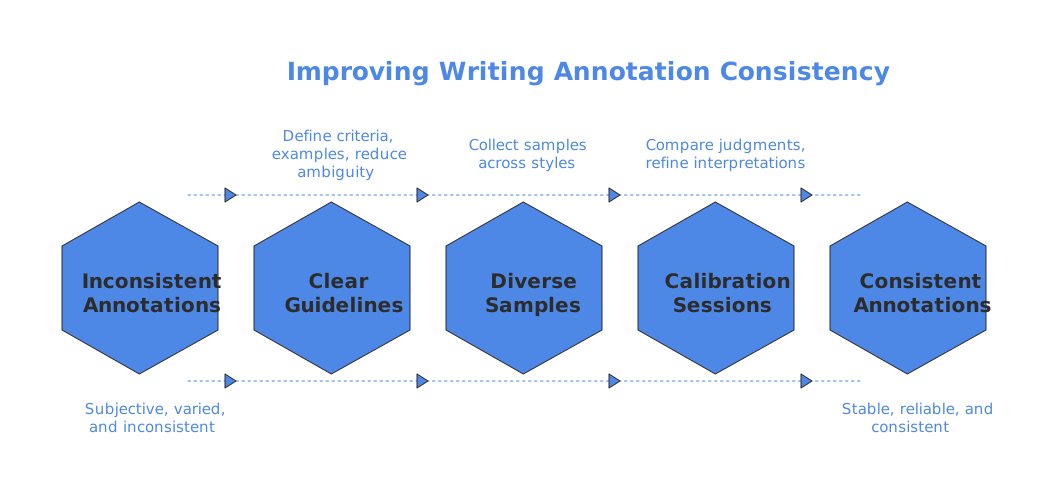
Evaluating writing quality involves subjective judgments that can vary among annotators. Annotators may disagree on whether an argument is well supported or whether a paragraph is coherent. To address this challenge, annotation guidelines must provide clear definitions, examples, and criteria that reduce ambiguity. Reviewers play a critical role in ensuring that subjective assessments align with established standards.
Variation in Writing Styles
Writers express ideas differently, and writing styles vary across genres, age groups, and proficiency levels. Capturing this variety requires collecting diverse samples. Without diversity, datasets may bias models toward specific writing styles and fail to generalize well to real-world contexts. Annotators must consider these variations and apply labels consistently across samples with different styles.
Consistency Across Annotators
Writing annotation requires consistent application of labels across a large dataset. Annotators must follow shared guidelines and participate in calibration sessions where they compare judgments and refine interpretations. This consistency ensures that models learn from stable and reliable data, improving their performance in writing assessment tasks.
Designing Annotation Guidelines for Writing Datasets
Annotation guidelines define the categories, decision rules, and criteria that annotators follow. Well-structured guidelines help maintain consistency and reduce subjectivity.
Defining Annotation Dimensions
Guidelines outline writing dimensions such as clarity, organization, vocabulary usage, and argument quality. Each dimension includes detailed definitions and examples to illustrate expected standards. These dimensions help annotators evaluate writing holistically and categorize specific strengths or weaknesses. Defining these dimensions clearly ensures that models learn the correct indicators of writing quality.
Handling Mixed Writing Features
Some writing samples contain mixed features that make label assignment challenging. A paragraph may contain well-structured arguments but lack clarity at the sentence level. Annotation guidelines must describe how to treat such cases and whether to prioritize certain writing dimensions. Without clear guidance, annotators may assign inconsistent labels that reduce dataset reliability.
How AI Models Use Writing Annotation Datasets
AI models rely on annotated writing datasets to learn how to evaluate writing quality and provide feedback. Writing annotation supports a range of tasks, from document scoring to content recommendation.
Learning Writing Quality Patterns
Models analyze writing samples to identify patterns that correspond to high or low writing quality. They learn relationships between vocabulary usage, sentence structure, and clarity. By identifying these patterns, AI systems can offer targeted feedback that improves writing effectiveness. Models may also learn to recognize genre-specific writing characteristics, enhancing their ability to evaluate diverse writing styles.
Understanding Argumentation and Coherence
Annotated discourse structures help models understand how ideas are connected within a text. Models learn how writers introduce concepts, provide evidence, and transition between arguments. By analyzing annotated discourse patterns, AI systems can evaluate whether essays maintain logical flow and coherence. These capabilities support automated assessment tools that help students refine their writing structure.
Evaluating Writing Annotation Datasets
Evaluation ensures that writing annotation datasets support accurate and reliable model performance. Evaluators analyze label quality, annotation consistency, and data diversity.
Assessing Annotation Accuracy
Reviewers examine annotated samples to verify label accuracy and identify inconsistencies. They compare annotations across multiple annotators to ensure that labels reflect shared criteria. Academic research databases such as JSTOR contain studies that illustrate how annotation accuracy influences educational outcomes and writing research.
Evaluating Representational Diversity
Datasets must reflect diverse writing styles, genres, and proficiency levels. Evaluators assess whether the dataset includes various types of writing tasks and whether samples represent different linguistic backgrounds. Diversity ensures that models generalize across contexts and avoid biases related to writing styles or proficiency.
Applications of Writing Annotation
Writing annotation supports practical applications across education, content creation, and professional writing support. These applications highlight the value of high-quality writing datasets.
Automated Writing Feedback
AI systems use writing annotation to provide targeted feedback on writing assignments. They identify issues related to structure, coherence, and clarity, offering suggestions for improvement. These tools help students develop writing skills through guided practice and real-time insights.
Writing Quality Assessment
Writing annotation supports automated scoring and quality assessment for standardized tests and educational programs. Annotated datasets help models replicate human scoring patterns, improving consistency and reducing administrative workload. Organizations such as the OECD emphasize the importance of writing assessment within global education frameworks.
Future Directions in Writing Annotation
As AI writing tools grow more sophisticated, the field of writing annotation continues to evolve. Future developments may include multimodal annotation, discourse-focused models, and expanded datasets.
Multimodal Writing Analysis
Future writing datasets may incorporate visual or audio components related to writing tasks. Multimodal datasets could capture interactions between written text and supplementary materials, helping models understand writing in richer contexts. Integrating multimodal elements requires new annotation methods and updated guidelines.
Discourse-Aware Writing Models
Advancements in AI may lead to models that interpret writing at deeper discourse levels. These models could analyze argumentation structure, thematic progression, and rhetorical strategies with greater sophistication. Discourse-aware models require detailed annotation that captures complex relationships between ideas.
If You Are Building Writing Annotation or Feedback Datasets
High-quality writing annotation is essential for training AI systems that evaluate writing and provide meaningful feedback. If you are preparing datasets for writing assessment, educational technology, or writing quality analysis, the DataVLab team can help design annotation workflows that improve model accuracy and ensure reliable performance. Share your goals, and we can support your NLP initiatives with precisely annotated writing samples.
What is Writing annotation?
Writing annotation supports the development of AI systems that analyze essays, evaluate writing quality, and provide meaningful feedback to learners. This article examines how annotated writing datasets are constructed, what writing features annotators label, and how these labels help models understand coherence, organization, style, and discourse structure.
What does the section on “Writing annotation workflows” explain?
Writing annotation requires thoughtful workflows that combine domain knowledge, clear guidelines, and iterative quality checks. These workflows ensure that annotated datasets support consistent and reliable model performance. Annotators segment essays into meaningful units such as sentences, clauses, or paragraphs depending on annotation goals.
What are the main challenges of Writing annotation?
Writing annotation presents unique challenges due to the complexity and subjectivity inherent in writing assessment. These challenges must be addressed through rigorous annotation practices and detailed guidelines. Evaluating writing quality involves subjective judgments that can vary among annotators.
What is involved in designing annotation guidelines for writing datasets?
Annotation guidelines define the categories, decision rules, and criteria that annotators follow. Well-structured guidelines help maintain consistency and reduce subjectivity. Guidelines outline writing dimensions such as clarity, organization, vocabulary usage, and argument quality.
What does the article explain about how AI models use writing annotation datasets?
AI models rely on annotated writing datasets to learn how to evaluate writing quality and provide feedback. Writing annotation supports a range of tasks, from document scoring to content recommendation. Models analyze writing samples to identify patterns that correspond to high or low writing quality.
What is the future of Writing annotation?
As AI writing tools grow more sophisticated, the field of writing annotation continues to evolve. Future developments may include multimodal annotation, discourse-focused models, and expanded datasets. Future writing datasets may incorporate visual or audio components related to writing tasks.