
MRI Annotation Services for Brain, Musculoskeletal, and Soft Tissue Imaging AI
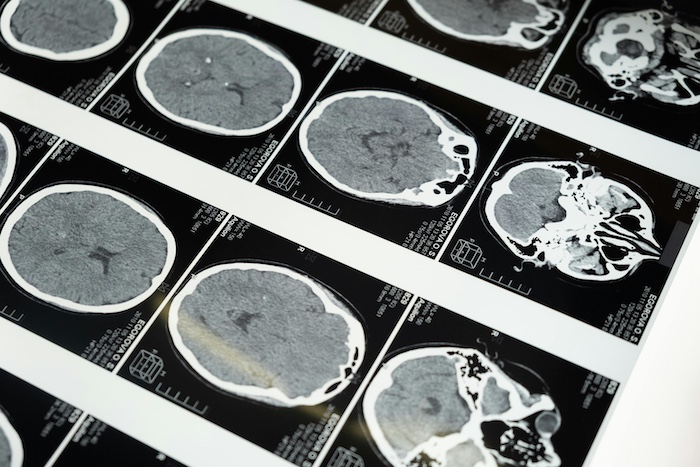

MRI Annotation Services
Built for teams shipping medical AI who need reliable labeled 3D data. You get segmentation masks, classification labels, and 3D labels, stable label guidelines, and QA you can audit, without slowing your roadmap. MRI Annotation Services is delivered with secure workflows and consistent reporting from pilot to production.
Accurate MRI segmentation across neuroimaging, musculoskeletal, and soft tissue studies.
Support for multi sequence MRI including T1, T2, FLAIR, DWI, and contrast enhanced scans.
Quality review that ensures volumetric and slice level consistency.
MRI datasets require precise and structured annotation to support AI systems that analyze soft tissue, neurological structures, musculoskeletal regions, and pathology related patterns. MRI presents unique challenges such as variable contrast, anatomical complexity, and multi sequence variation.
High quality annotation is essential for training reliable and clinically aligned AI models. DataVLab provides MRI annotation services for research institutions, radiology technology companies, and AI teams needing accurate and consistent datasets.
Annotators follow detailed guidelines that define anatomical boundaries, region hierarchies, segmentation logic, and consistency rules across slices and sequences.
We adapt workflows to T1, T2, FLAIR, DWI, DTI, contrast enhanced MRI, and other sequences. Our MRI annotation tasks include brain region segmentation, vessel tracing, lesion marking, musculoskeletal structure labeling, organ segmentation, tumor region annotation, spinal labeling, and tissue classification. We support both 2D slice based annotation and 3D volumetric workflows that maintain alignment across the entire MRI volume. Quality control incorporates multi step review, consistency checks across sequences, and targeted correction cycles.
Sensitive MRI datasets can be processed under GDPR aligned workflows with optional EU only annotation. Whether your objective is neuroimaging research, orthopedic imaging AI, tumor detection models, or advanced anatomical segmentation, our MRI annotation services deliver structured and reproducible datasets.
How DataVLab Supports MRI Based AI Development
We apply structured workflows and detailed anatomical guidelines to produce reliable MRI training datasets.

Neuroimaging Annotation

Brain region segmentation and pathology marking
We annotate white matter, gray matter, ventricles, vessels, lesions, and region specific structures for research and AI assisted neuroimaging models.
Musculoskeletal MRI Annotation
Labeling for joints, tendons, ligaments, and soft tissue
We annotate musculoskeletal structures including cartilage, tendons, ligaments, bone interfaces, and pathology related regions.
Organ and Soft Tissue Segmentation
High accuracy masks for abdominal and pelvic MRI
We annotate liver, kidneys, prostate, uterus, and other organs with precise region boundaries based on your class taxonomy.
Tumor and Lesion Annotation
Structured labeling for research and detection models
We annotate tumor regions, suspicious findings, and segmented lesion zones according to project specific rules and review cycles.
3D Volumetric MRI Annotation
Slice consistent labeling across full MRI volumes
We annotate volumetric datasets and maintain spatial consistency between slices, supporting advanced segmentation pipelines.
MRI Dataset Quality Review
Human in the loop correction for clean MRI datasets
Reviewers check segmentation boundaries, inter slice consistency, and adherence to clinical guidelines before finalizing datasets.
Discover How Our Process Works

Defining Project
Sampling & Calibration
Annotation
Review & Assurance
Delivery
Explore Industry Applications
We provide solutions to different industries, ensuring high-quality annotations tailored to your specific needs.
We provide high-quality annotation services to improve your AI's performances

Annotation & Labeling for AI
Unlock the full potential of your AI application with our expert data labeling tech. We ensure high-quality annotations that accelerate your project timelines.
Medical Annotation Services
Medical annotation services for radiology, pathology, clinical text, and biosignals. Expert workflows, strict QA, and secure handling for sensitive healthcare datasets.
Medical Data Labeling Services
High quality labeling for medical imaging, clinical documents, biosignals, and multimodal datasets used in healthcare and biomedical AI development.
Medical Image Annotation Services
High accuracy annotation for MRI, CT, X-ray, ultrasound, and pathology imaging used in diagnostic support, research, and medical AI development.
Radiology Image Annotation Services
High accuracy annotation for radiology imaging including MRI, CT, X-ray, PET, and specialized scans used in diagnostic support and medical AI development.
Pathology Annotation Services
High accuracy annotation for pathology and microscopy datasets including whole slide images, tissue regions, cellular structures, and oncology research features.
FAQs
Here are some common questions we receive from our clients to assist you.
What is MRI annotation and what does it include?
MRI annotation labels magnetic resonance imaging data so that AI models can learn to segment anatomical structures, detect and characterize pathological findings, and support clinical decision-making from MRI. It includes volumetric organ segmentation (brain, liver, kidney, prostate, heart, spinal cord), lesion detection and characterization (tumor location, size, boundaries, signal characteristics), tissue classification (white matter, gray matter, cerebrospinal fluid in neuroimaging), and functional MRI annotation for neuroscience applications. MRI annotation requires radiologists or subspecialty physicians with MRI interpretation training because the relevant findings require clinical expertise to identify correctly from MRI contrast characteristics.
What makes MRI annotation more challenging than standard image annotation?
MRI annotation faces several challenges that make it more demanding than standard image annotation. MRI produces 3D volumetric data rather than 2D images: each scan consists of dozens to hundreds of axial slices that must be annotated consistently as a 3D structure, requiring annotators to trace boundaries across all slices. Different MRI sequences (T1, T2, FLAIR, DWI, DCE) show tissue differently and each requires sequence-specific interpretation knowledge. Signal intensity does not have absolute calibration (unlike CT Hounsfield units), making intensity-based classification dependent on relative contrast rather than absolute thresholds. These characteristics require radiologist expertise and specialized annotation tools that support multi-planar viewing and 3D brush annotation.
What is brain MRI annotation and why is it particularly complex?
Brain MRI annotation is one of the most complex annotation categories in medical AI because the brain contains hundreds of anatomical structures with complex 3D morphology, and pathological findings span a wide range of conditions (tumors, stroke, demyelination, atrophy, vascular disease) that each require subspecialty knowledge to characterize accurately. Standard neuroimaging annotation tasks include white matter lesion segmentation (for multiple sclerosis monitoring), glioma segmentation and grading (BraTS challenge tasks), hippocampal segmentation for Alzheimer's disease research, and anatomical parcellation for neuroscience research. Each task requires neuroimaging-specialized radiologists or neuroscientists as annotators.
What subspecialty expertise is required for different MRI annotation projects?
MRI of specific body regions requires radiologists with subspecialty training in that region. Cardiac MRI annotation requires cardiologists or cardiac radiologists who understand myocardial function, perfusion, and tissue characterization. Prostate MRI annotation for cancer detection requires radiologists trained in PI-RADS scoring. Musculoskeletal MRI annotation requires radiologists or orthopedic surgeons familiar with joint anatomy and pathology. Liver MRI annotation for hepatocellular carcinoma detection requires hepatologists or radiologists trained in LI-RADS criteria. DataVLab recruits annotators with the appropriate subspecialty background for each MRI annotation project.
How long does MRI annotation take?
MRI annotation throughput depends on the anatomical region, annotation type, and scan complexity. Simple organ segmentation on a single organ (kidney, liver) can proceed at 5 to 15 cases per radiologist hour. Brain tumor segmentation with multi-label annotation (enhancing tumor, necrosis, edema) requires 30 to 90 minutes per case. Full brain parcellation into hundreds of anatomical structures requires 4 to 12 hours per scan. For high-volume programs, multi-atlas segmentation (using registered atlas structures as pre-annotation) or deep learning-assisted segmentation (pre-segmenting with a baseline model, radiologist reviews and corrects) can increase throughput by 2 to 4 times while maintaining clinical quality standards.
What MRI annotation services does DataVLab provide?
DataVLab provides MRI annotation for brain MRI (tumor segmentation, white matter lesion analysis, hippocampal segmentation, anatomical parcellation), body MRI (liver, kidney, prostate, adrenal, pancreas), cardiac MRI (myocardial segmentation, function analysis, fibrosis characterization), musculoskeletal MRI (joint structures, soft tissue, cartilage), spinal MRI (disc pathology, spinal cord segmentation, vertebral body assessment), and functional MRI for neuroscience research. All MRI annotation programs use radiologists or subspecialty physicians with relevant MRI interpretation training. EU-based annotation with GDPR-compliant patient data handling is available for European programs.


Custom service offering

Up to 10x Faster
Accelerate your AI training with high-speed annotation workflows that outperform traditional processes.

AI-Assisted
Seamless integration of manual expertise and automated precision for superior annotation quality.

Advanced QA
Tailor-made quality control protocols to ensure error-free annotations on a per-project basis.

Highly-specialized
Work with industry-trained annotators who bring domain-specific knowledge to every dataset.

Ethical Outsourcing
Fair working conditions and transparent processes to ensure responsible and high-quality data labeling.

Proven Expertise
A track record of success across multiple industries, delivering reliable and effective AI training data.

Scalable Solutions
Tailored workflows designed to scale with your project’s needs, from small datasets to enterprise-level AI models.

Global Team
A worldwide network of skilled annotators and AI specialists dedicated to precision and excellence.
Potential Today
Blog & Resources
Explore our latest articles and insights on Data Annotation

.avif)
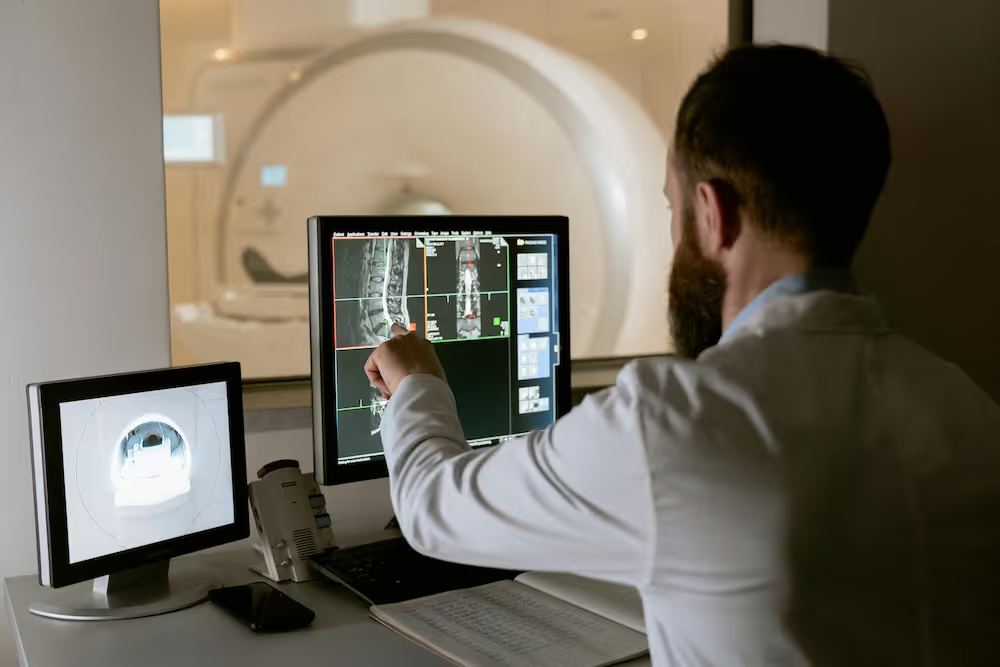

We are here to assist in providing high-quality data annotation services and improve your AI's performances