Weed Detection Datasets: How to Annotate Agricultural Images for Field AI Systems
.jpeg)

Weed detection datasets are essential for modern agricultural AI, enabling automated weeding, precision spraying, selective herbicide application and yield protection. High quality annotations allow models to distinguish crops from weeds under challenging field conditions and improve the accuracy of robotic and drone-based weed control systems. This article explains how weed detection datasets are collected, prepared and annotated, how to design labeling taxonomies, and how to overcome the visual complexity of real agricultural environments. It also covers best practices for segmentation, multi-species weed labeling, field photography, quality control and dataset scaling for production-ready AI.
- Weed detection datasets are essential for modern agricultural AI, enabling automated weeding, precision spraying, selective herbicide application and yield protection.
- High quality annotations allow models to distinguish crops from weeds under challenging field conditions and improve the accuracy of robotic and drone-based weed control systems.
- This article explains how weed detection datasets are collected, prepared and annotated, how to design labeling taxonomies, and how to overcome the visual complexity of real agricultural environments.
- It also covers best practices for segmentation, multi-species weed labeling, field photography, quality control and dataset scaling for production-ready AI.
Why Weed Detection Matters
Weed detection is one of the most impactful applications of agricultural AI because weeds compete aggressively with crops for sunlight, nutrients and water. Early weed identification helps farmers protect yields, reduce chemical inputs and improve sustainability. As precision agriculture tools expand, weed detection models are increasingly used in robotic weeding systems, tractor-mounted sprayers and drone scouting workflows. Accurate datasets enable AI to differentiate weeds from crops under diverse conditions. Weed identification directly influences operational efficiency, energy usage and chemical reduction across modern farming systems.
How AI Interprets Weeds in Agricultural Imagery
AI models learn to identify weeds by analyzing visual cues such as leaf shape, plant density, color variation and growth patterns. Multi-species weed datasets help models generalize across fields where weed composition changes with soil conditions and crop type. When models are trained on well-annotated images, they can distinguish weeds from crop rows even in visually complex environments. The temporal and spatial variability of weeds requires datasets with wide coverage and consistent labeling across geographies.
What Features Models Commonly Learn
Weed detection models look for irregular patterns in vegetation, including leaf margins, stem branching and canopy texture. They also recognize the geometric alignment of crop rows, which helps them detect vegetation that breaks expected crop structures. With sufficient variation, models learn to recognize early growth weeds that are small and visually similar to emerging crops. These features allow the system to operate effectively in early season conditions when weed control is most valuable.
Why Field Variability Matters
Field conditions change across soil types, moisture levels, weather patterns and canopy density. These variations affect color, brightness and vegetation contrast. Datasets must include enough diversity to prevent overfitting. AI must handle differences in weed growth habits, plant density and environmental noise. Ensuring variability across images improves detection reliability in real farming conditions.
Designing a Taxonomy for Weed Detection
Effective weed detection depends on clear classification rules that define what counts as weeds and how they should be labeled. Taxonomies may be simple, treating all weeds as one category, or more detailed, labeling species separately. The level of granularity depends on the intended use case and the complexity of the cropping system.
High Level Weed vs Crop Labels
Many production systems use a simple taxonomy with two labels: weed and crop. This approach accelerates annotation and supports applications such as precision spraying. High level labels work well for robotic weeding systems that remove all non-crop vegetation regardless of weed species.
Multi-Species Weed Labeling
In research-heavy applications, datasets may include individual weed species. Multi-species labels support ecological studies, targeted herbicide strategies and breeding programs aimed at weed resistance. Species-level labeling increases annotation complexity, but improves the model’s ability to distinguish similar-looking weeds.
Category Definitions and Annotation Clarity
Category definitions must be unambiguous. Annotators must understand which plants belong to which species and how to handle mixed vegetation areas. Clear definitions reduce confusion and prevent inconsistent labeling, especially when weeds are visually similar to crops.
Collecting Images for Weed Detection Datasets
The quality of weed detection datasets depends heavily on image collection strategies. Images should capture variability in lighting, growth stages and field conditions. Gathering diverse samples ensures the model can generalize across farms, seasons and weather conditions.
Field-Level Photography
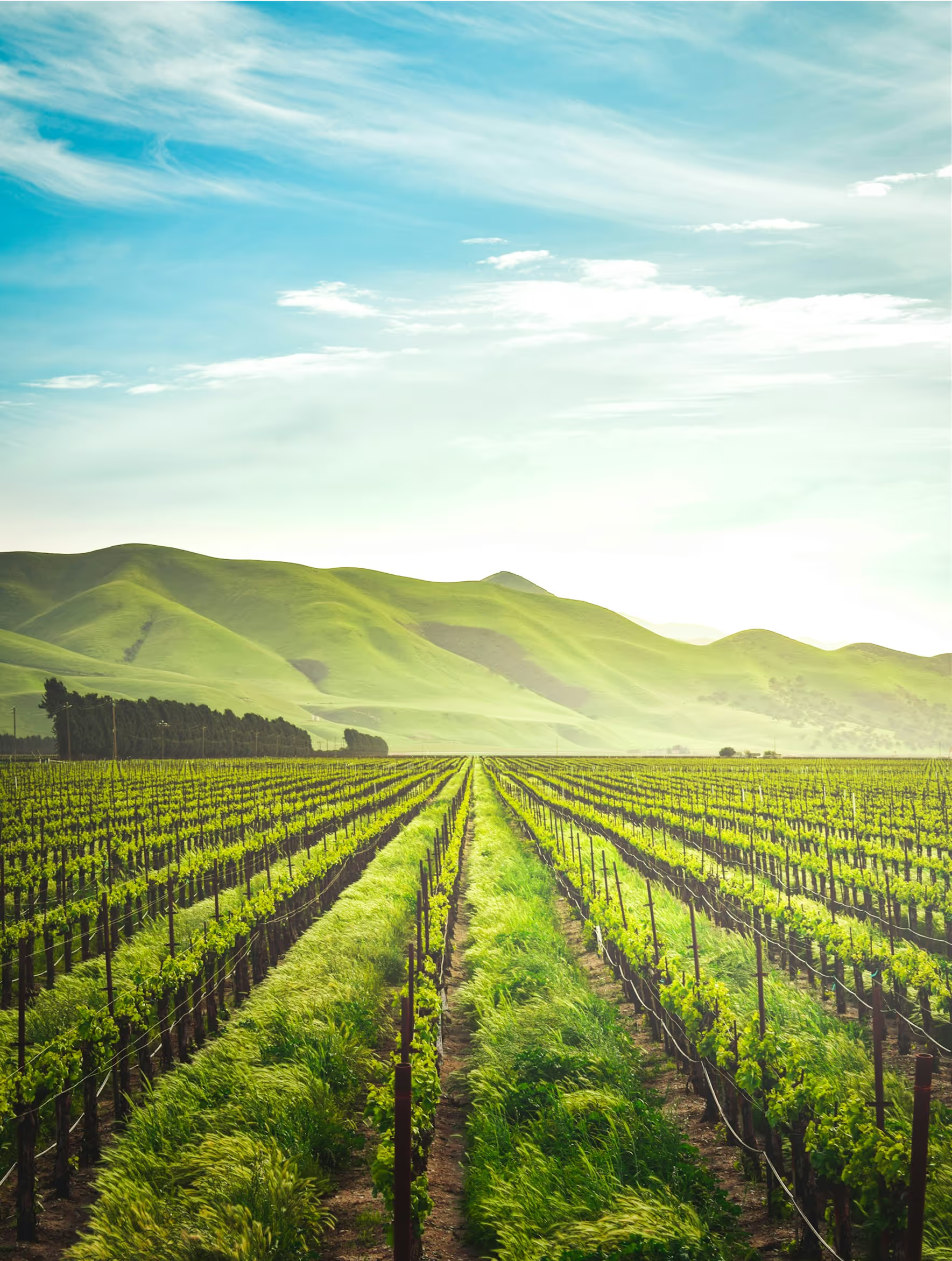
Field photography captures weeds in their natural context, surrounded by soil, stubble, crop rows and field residues. These images represent the complexity of real-world environments where AI will operate. Field images are essential for detecting weeds across varying soil textures, moisture levels and lighting conditions.
Drone-Based Weed Imaging
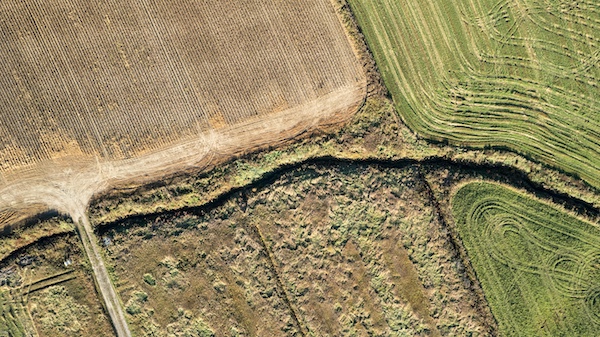
Drone imagery provides aerial views that help models detect weed distribution patterns across large areas. High-resolution drone data captures the contrast between weeds and crops from above and provides spatial context useful for precision spraying. Drone images also allow time-efficient surveillance of large fields.
Close-Range Leaf and Canopy Images
Close-range images captured by handheld devices or tractor-mounted cameras support detailed analysis of plant characteristics. These images reveal leaf shape, surface texture and branching patterns that help classify weeds at early growth stages. Combining close-range images with aerial views strengthens dataset diversity.
Preprocessing Images Before Annotation
Preprocessing ensures images are consistent and ready for annotation. This is particularly important in field conditions where environmental noise is common.
Normalizing Brightness and Contrast
Variations in sunlight and cloud cover can significantly affect vegetation appearance. Normalizing brightness and contrast helps annotators distinguish weeds from crops more easily. Normalization also improves consistency across sequences captured at different times of day.
Removing Soil and Residue Noise
Soil, rocks and residue sometimes resemble vegetation in color or texture. Preprocessing may include color correction or texture extraction to simplify annotator decisions. Clean preprocessing allows annotators to focus on true vegetation signals.
Standardizing Resolution
Camera resolution may vary across devices. Standardizing resolution ensures that weeds appear at consistent scales. This improves annotation accuracy and reduces confusion in multi-device datasets.
Annotation Methods for Weed Detection Datasets
Different annotation methods offer different levels of detail depending on the intended model and operational context.
Pixel-Level Segmentation for Precision
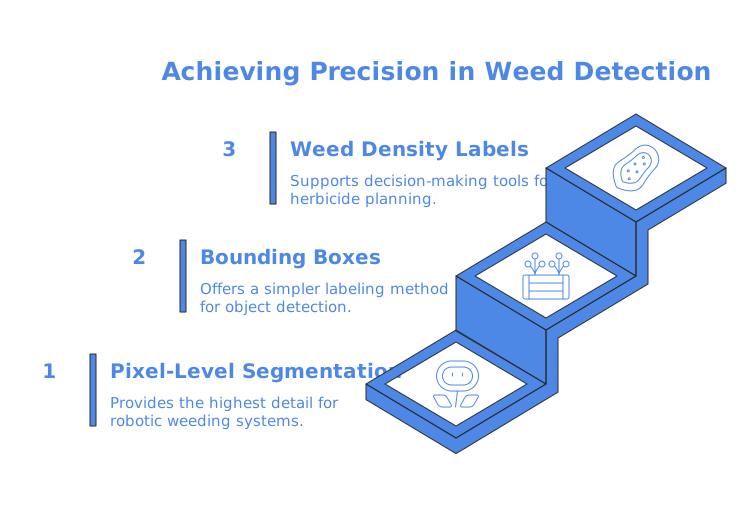
Pixel-level segmentation provides the highest detail and is essential for robotic weeding systems that rely on precise boundaries. Segmentation outlines each weed plant and distinguishes it from the crop canopy. This method supports high-precision herbicide application and mechanical removal systems.
Bounding Boxes for Object Detection
Bounding boxes provide a simpler labeling method for systems that do not require precise borders. Box annotations are suitable for models that categorize and locate weeds without needing exact boundaries. They significantly reduce labeling time while still providing meaningful detection signals.
Weed Density and Coverage Labels
Some datasets assign density or coverage labels indicating the proportion of weeds within a region. These datasets support decision-making tools for herbicide planning and field scouting. Density labeling accelerates annotation for large-scale field images.
Creating Annotation Guidelines
Clear annotation guidelines ensure consistent labeling across teams and reduce variability in plant classification.
Defining Weed Boundaries
Annotation guidelines must specify how to handle cases where weeds overlap with crops or soil. Annotators need reference images showing typical and atypical weed structures. Boundaries must be drawn consistently even when weeds are partly obscured.
Handling Early Growth Weeds
Early stage weeds can be highly similar to emerging crops. Guidelines must clearly define characteristics such as leaf symmetry, position and color gradients that distinguish young weeds. These rules reduce errors in classification during the most important period for weed control.
Addressing Mixed Vegetation Zones
Mixed zones where weeds and crops intermingle require special rules. Annotators must know how to separate overlapping plants or how to tag mixed patches depending on the taxonomy. Consistent rules improve dataset reliability and model accuracy.
Quality Control for Weed Detection Datasets
Weed detection datasets require rigorous quality control because inconsistent labeling can significantly impact model reliability in the field.
Multi-Layer Annotation Review
A multi-layer review process helps identify mislabels, boundary errors and inconsistencies across annotators. Second-stage reviewers confirm that labels meet project guidelines and correct errors overlooked at the first stage.
Expert Agronomist Oversight
Agronomists review the dataset to ensure that weed species are labeled correctly and distinctions between weeds and crops remain biologically accurate. Expert review helps refine category definitions and improve scientific validity.
Automated Consistency Checks
Automated tools detect irregular shapes, incomplete annotations or label inconsistencies across images. Although automated checks cannot replace human judgment, they significantly speed up quality validation.
Challenges in Weed Detection Annotation
Weed detection is one of the most challenging tasks in agricultural AI due to the variability and unpredictability of weeds.
Visual Similarities Between Weeds and Crops
Certain weeds resemble crops in early development stages. Without accurate labeling, models may confuse the two, especially in monoculture fields with dense planting patterns. High-resolution data and clear guidelines mitigate this problem.
Environmental Noise
Shadows, dust and soil color variations introduce noise that complicates annotation. Annotators must consider lighting shifts, moisture patterns and debris that affect visibility. Environmental noise is especially challenging in drone imagery where subtle details may be lost.
Irregular and Overlapping Growth
Weeds often grow in irregular structures and cluster in unpredictable ways. Overlapping plants introduce segmentation complexity. Annotators must carefully distinguish each plant’s boundaries to ensure the model learns reliable spatial cues.
Scaling Weed Detection Datasets
Scaling datasets requires efficient annotation workflows, automated assistance and structured management systems.
Pre-Labeling and Model-Assisted Annotation
Pre-labeling tools generate initial predictions that annotators refine. This reduces manual effort and ensures consistent labeling across large datasets. Model-assisted annotation works well for repetitive vegetation patterns.
Dataset Version Control
Version control tracks updates and ensures consistency over time. This is crucial for multi-season datasets that expand annually. Proper version management supports long-term model development.
Integrating Multi-Season and Multi-Field Data
Weed prevalence changes seasonally and geographically. Integrating data from multiple fields and seasons enhances dataset diversity. A broad dataset improves model generalization and performance across real-world conditions.
How Weed Detection Datasets Enable Advanced AI Applications
High-quality weed detection datasets support a wide range of advanced agricultural AI applications that improve sustainability, efficiency and yield.
Robotic Weeding Systems
Robotics rely heavily on precise weed detection to target weeds without damaging crops. Accurate segmentation allows robots to distinguish vegetation types and perform mechanical removal.
Precision Spraying and Herbicide Reduction
AI-driven sprayers use weed detection models to apply herbicides only where needed. This reduces chemical usage, lowers environmental impact and cuts operational costs. Precise detection increases the effectiveness of selective spraying.
Field Scouting and Decision Support
Drone-based scouting integrates weed detection to help agronomists assess field conditions. These models provide insights into weed pressure, required interventions and long-term field health.
Supporting Your Weed Detection AI Projects
If you are developing weed detection models or building large agricultural datasets, we can help you create high-precision segmentation, bounding box and multi-species labeling workflows tailored to your field conditions. Our agricultural annotation teams support drone, satellite and ground imaging projects with consistent, scalable and accurate weed-identification processes. If you want help building your next weed detection dataset, feel free to reach out anytime.
What are Weed detection datasets?
Weed detection datasets are essential for modern agricultural AI, enabling automated weeding, precision spraying, selective herbicide application and yield protection. High quality annotations allow models to distinguish crops from weeds under challenging field conditions and improve the accuracy of robotic and drone-based weed control systems.
Why does weed detection matter?
Weed detection is one of the most impactful applications of agricultural AI because weeds compete aggressively with crops for sunlight, nutrients and water. Early weed identification helps farmers protect yields, reduce chemical inputs and improve sustainability.
What does the article explain about how AI interprets weeds in agricultural imagery?
AI models learn to identify weeds by analyzing visual cues such as leaf shape, plant density, color variation and growth patterns. Multi-species weed datasets help models generalize across fields where weed composition changes with soil conditions and crop type.
What does the section on “Preprocessing images before annotation” explain?
Preprocessing ensures images are consistent and ready for annotation. This is particularly important in field conditions where environmental noise is common. Variations in sunlight and cloud cover can significantly affect vegetation appearance.
How can teams ensure quality in Weed detection datasets?
Weed detection datasets require rigorous quality control because inconsistent labeling can significantly impact model reliability in the field. A multi-layer review process helps identify mislabels, boundary errors and inconsistencies across annotators. Second-stage reviewers confirm that labels meet project guidelines and correct errors overlooked at the first stage.
What does the article explain about how weed detection datasets enable advanced AI applications?
High-quality weed detection datasets support a wide range of advanced agricultural AI applications that improve sustainability, efficiency and yield. Robotics rely heavily on precise weed detection to target weeds without damaging crops. Accurate segmentation allows robots to distinguish vegetation types and perform mechanical removal.