
Pathology Annotation Services for Whole Slide Imaging, Histology, and Cancer Research AI

Pathology Annotation Services
Built for teams shipping medical AI who need reliable labeled documents. You get segmentation masks and classification labels, stable label guidelines, and QA you can audit, without slowing your roadmap. Pathology Annotation Services is delivered with secure workflows and consistent reporting from pilot to production.
Fine grained annotation for cellular and tissue structures across multiple magnifications.
Support for whole slide imaging and high resolution histology datasets.
Structured guidelines that maintain consistency across large and complex slides.
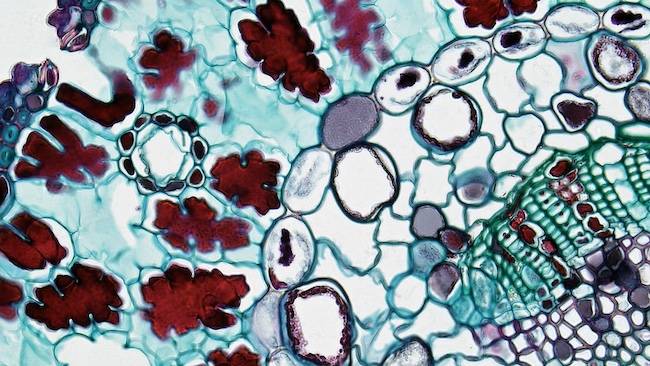
Pathology datasets are essential for AI systems that analyze tissue structure, cellular patterns, and disease related features. Whole slide images contain millions of pixels and require careful, fine grained annotation to support research and diagnostic assistance models. High quality labeling is critical because even minor inaccuracies can significantly affect model performance. DataVLab provides pathology annotation services for research institutions, digital pathology companies, and medical AI teams working on cancer detection, tissue classification, and morphological analysis.
Annotators follow structured guidelines that define regions, cell types, tissue organization, and labeling logic across different magnifications. We support whole slide imaging, histology slides, cytology images, immunohistochemistry datasets, fluorescence microscopy, and other forms of biomedical imaging.
Annotation tasks include segmentation of tissue regions, nuclei labeling, cell type classification, tumor region marking, stroma segmentation, gland annotation, and detailed morphological structures. Quality control includes multi scale review, cross validation of boundaries, sampling checks, and correction cycles.
Sensitive datasets can be handled under GDPR aligned workflows with optional EU only annotation. Whether your focus is oncology, digital pathology workflows, biomarker research, or large scale tissue classification, our pathology annotation services deliver precise and consistent datasets.
How DataVLab Supports Pathology and Histology AI
We provide detailed annotation workflows for large scale pathology datasets with strong multi level quality review.

Whole Slide Image Annotation

Region labeling for tissue and sub tissue structures
We annotate tumor regions, stroma, glands, background areas, and specific tissue types across entire whole slide images.
Cell and Nuclei Annotation
Accurate labeling for cellular morphology
We annotate nuclei boundaries, cell types, mitotic figures, and morphological patterns that support oncology and biomarker research.
Gland and Structure Annotation
Precise boundaries for structural segmentation
We annotate glands, ducts, and structural regions that are important for cancer grading and histological classification.
Immunohistochemistry and Fluorescence Images
Region and cell labeling across specialized staining
We annotate fluorescent markers, stained regions, and signal specific features that support biomarker quantification.
Tissue Classification
Multi class labeling for diverse histology datasets
We classify tissue types, sub regions, and pathological categories using class taxonomies that match your project requirements.
Pathology Dataset Quality Review
Multi scale validation for consistent high resolution labeling
Reviewers check annotations across low and high magnification views, refine boundaries, and ensure consistency between tissue regions.
Discover How Our Process Works

Defining Project
Sampling & Calibration
Annotation
Review & Assurance
Delivery
Explore Industry Applications
We provide solutions to different industries, ensuring high-quality annotations tailored to your specific needs.
We provide high-quality annotation services to improve your AI's performances

Annotation & Labeling for AI
Unlock the full potential of your AI application with our expert data labeling tech. We ensure high-quality annotations that accelerate your project timelines.
Medical Annotation Services
Medical annotation services for radiology, pathology, clinical text, and biosignals. Expert workflows, strict QA, and secure handling for sensitive healthcare datasets.
Medical Data Labeling Services
High quality labeling for medical imaging, clinical documents, biosignals, and multimodal datasets used in healthcare and biomedical AI development.
Medical Image Annotation Services
High accuracy annotation for MRI, CT, X-ray, ultrasound, and pathology imaging used in diagnostic support, research, and medical AI development.
Radiology Image Annotation Services
High accuracy annotation for radiology imaging including MRI, CT, X-ray, PET, and specialized scans used in diagnostic support and medical AI development.
MRI Annotation Services
High accuracy MRI annotation for neuroimaging, musculoskeletal imaging, soft tissue segmentation, organ labeling, and research grade AI development.
FAQs
Here are some common questions we receive from our clients to assist you.
What is pathology annotation and what does it include?
Pathology annotation labels histopathology slides (whole slide images scanned from tissue biopsies and surgical specimens) and cytology samples so that AI models can learn to detect, classify, and quantify pathological findings. It includes cell segmentation (nucleus detection and boundary delineation), tissue region classification (tumor, stroma, necrosis, normal parenchyma, immune infiltrate), cancer grading (Gleason grading for prostate cancer, Nottingham grading for breast cancer), biomarker quantification (Ki-67 proliferation index, HER2 scoring, PD-L1 scoring), and mitosis detection. Pathology annotation requires board-certified pathologists because the diagnostic categories require years of specialized training to reliably identify.
What makes whole slide image pathology annotation technically demanding?
Pathology annotation is technically demanding for several reasons. Whole slide images are extremely large (0.5 to 3 gigabytes per slide at 40x magnification), requiring annotation tools that handle pyramidal image formats and allow annotators to navigate from low-magnification overview to high-magnification cellular detail. The relevant features span multiple scales: tumor architecture is assessed at low magnification while nuclear atypia is assessed at high magnification. Annotation of nuclear morphology (nuclear size, shape, chromatin pattern, nucleolar prominence) requires consistent guidelines with visual examples at each magnification level. Multi-class annotation across tumor, stroma, immune cells, necrosis, and normal tissue requires precise boundary decisions at every tissue transition.
What dataset design considerations are required for clinical-grade pathology AI?
AI-based pathology analysis for diagnostic use requires training datasets that are representative of the full clinical distribution of cases the system will encounter in deployment. For cancer detection systems, this requires annotation across the full histological grade spectrum from benign to high-grade malignancy, representation of different histological subtypes within each cancer type, coverage of different tissue preparation methods and staining protocols that create color and morphology variation, and representation of challenging cases (rare subtypes, tumor microenvironment variation, processing artifacts). DataVLab works with pathologists to design annotation programs that achieve the required coverage for clinical-grade pathology AI datasets.
How do regulatory requirements affect pathology AI annotation?
Pathology annotation for AI training increasingly falls within both MDR/IVDR medical device regulatory requirements and EU AI Act obligations. AI systems used as in vitro diagnostic devices (which includes computational pathology tools providing diagnostic support) require IVDR CE marking and are additionally high-risk under EU AI Act Annex I. Training data must satisfy the data governance requirements of Article 10, with documented annotation methodology, annotator qualifications (pathologist board certification and subspecialty training), inter-annotator agreement metrics, and dataset coverage analysis. DataVLab produces annotation documentation designed to satisfy these regulatory requirements for European computational pathology programs.
How long does pathology annotation take?
Pathology annotation throughput varies substantially by task complexity. Simple tissue region classification at low magnification (annotating tumor vs. stroma vs. necrosis regions) can proceed at 5 to 15 slides per pathologist hour. Detailed nuclear segmentation and morphological characterization at high magnification requires 1 to 3 hours per slide. Cancer grading (Gleason grading, Nottingham grading) with detailed regional annotation requires 2 to 6 hours per slide depending on tumor complexity. For high-volume pathology annotation programs, model-assisted workflows where AI pre-segments tissue regions and pathologists review and correct substantially improve throughput, typically reducing pathologist time by 40 to 60 percent while maintaining diagnostic-grade quality.
What pathology annotation services does DataVLab provide?
DataVLab provides pathology annotation for oncology AI (breast cancer, prostate cancer, colorectal cancer, lung cancer, and other tumor types), rare disease pathology annotation for conditions requiring specialist expertise, cytology annotation (cervical cytology, fine needle aspirate cytology, urine cytology), biomarker scoring datasets (HER2, PD-L1, Ki-67, hormone receptors), immunohistochemistry interpretation, and research pathology datasets for academic and pharmaceutical programs. All pathology annotation programs use board-certified pathologists with relevant subspecialty training. EU-based pathology annotation with GDPR-compliant data handling is available for European computational pathology programs.


Custom service offering

Up to 10x Faster
Accelerate your AI training with high-speed annotation workflows that outperform traditional processes.

AI-Assisted
Seamless integration of manual expertise and automated precision for superior annotation quality.

Advanced QA
Tailor-made quality control protocols to ensure error-free annotations on a per-project basis.

Highly-specialized
Work with industry-trained annotators who bring domain-specific knowledge to every dataset.

Ethical Outsourcing
Fair working conditions and transparent processes to ensure responsible and high-quality data labeling.

Proven Expertise
A track record of success across multiple industries, delivering reliable and effective AI training data.

Scalable Solutions
Tailored workflows designed to scale with your project’s needs, from small datasets to enterprise-level AI models.

Global Team
A worldwide network of skilled annotators and AI specialists dedicated to precision and excellence.
Potential Today
Blog & Resources
Explore our latest articles and insights on Data Annotation



We are here to assist in providing high-quality data annotation services and improve your AI's performances