Multilingual Speech Dataset: Training AI to Understand Multiple Languages
.jpeg)

Multilingual speech datasets contain transcribed, segmented, and labeled audio samples from speakers of multiple languages, dialects, and accents. These datasets enable AI systems to perform speech recognition, translation, and voice analytics across global populations. They include scripted and spontaneous speech, phonetic variations, speaker diversity, device variability, and environmental noise that reflect real-world communication. This article explains how multilingual speech datasets are constructed, how linguistic diversity is incorporated, how transcripts and phonetic labels are created, and why cross-language alignment is essential for building robust speech technologies. It also explores the challenges of dialect coverage, code-switching, transcription accuracy, and quality assurance across languages for high-performance ASR and speech processing applications.
- Multilingual speech datasets contain transcribed, segmented, and labeled audio samples from speakers of multiple languages, dialects, and accents.
- They include scripted and spontaneous speech, phonetic variations, speaker diversity, device variability, and environmental noise that reflect real-world communication.
- This article explains how multilingual speech datasets are constructed, how linguistic diversity is incorporated, how transcripts and phonetic labels are created, and why cross-language alignment is essential for building robust speech technologies.
- It also explores the challenges of dialect coverage, code-switching, transcription accuracy, and quality assurance across languages for high-performance ASR and speech processing applications.
Why Multilingual Speech Datasets Matter
Powering Global Speech Recognition Systems
Multilingual datasets allow AI systems to understand speech across languages without building separate models for each linguistic group. Research from the Language Technologies Institute at Carnegie Mellon University highlights that cross-language modeling improves accuracy by sharing acoustic patterns between related languages. These datasets help create scalable, universal ASR systems.
Supporting Translation and Cross-Lingual Applications
Multilingual speech datasets form the foundation of speech-to-text, text-to-text, and speech-to-speech translation systems. They provide examples of pronunciation, prosody, and phrase structure across languages, enabling models to map acoustic patterns to semantic meaning.
Enabling Speech AI for Global User Bases
Enterprises, apps, and devices targeting international markets need speech systems that work across accents, dialects, and languages. Multilingual data ensures that AI can handle diverse linguistic patterns and deliver consistent experiences across geographies.
Core Components of Multilingual Speech Datasets
Language-Labeled Speech Samples
Datasets include audio files categorized by language, dialect, and sometimes subdialect. Each sample is tied to consistent metadata describing speaker characteristics, region, and linguistic background.
Transcripts and Phonetic Annotations
Multilingual datasets include audio-aligned transcripts and, in some cases, phonetic labels that help models understand pronunciation structures. Accurate transcription is essential for training robust ASR systems.
Speaker and Environment Diversity
Speaker diversity ensures that datasets represent real linguistic variation. Environmental variation across indoor, outdoor, quiet, and noisy settings helps models generalize across communication scenarios.
Variability That Strengthens Multilingual Speech Models
Dialect and Accent Coverage
Languages vary widely across regions. Including dialects, accents, and local pronunciation patterns improves model performance and reduces geographic bias. The International Speech Communication Association emphasizes that dialect coverage is essential for global ASR.
Device and Channel Diversity
Recording quality varies across smartphones, headsets, microphones, and telecommunication channels. Including device and codec diversity helps multilingual models adapt to real-world audio.
Code-Switching and Mixed-Language Speech
In many regions, speakers alternate between languages within a single sentence or conversation. Capturing code-switching helps models operate reliably in multilingual societies and multilingual content platforms.
Techniques Used to Build Multilingual Speech Datasets
Large-Scale Crowdsourcing Across Regions
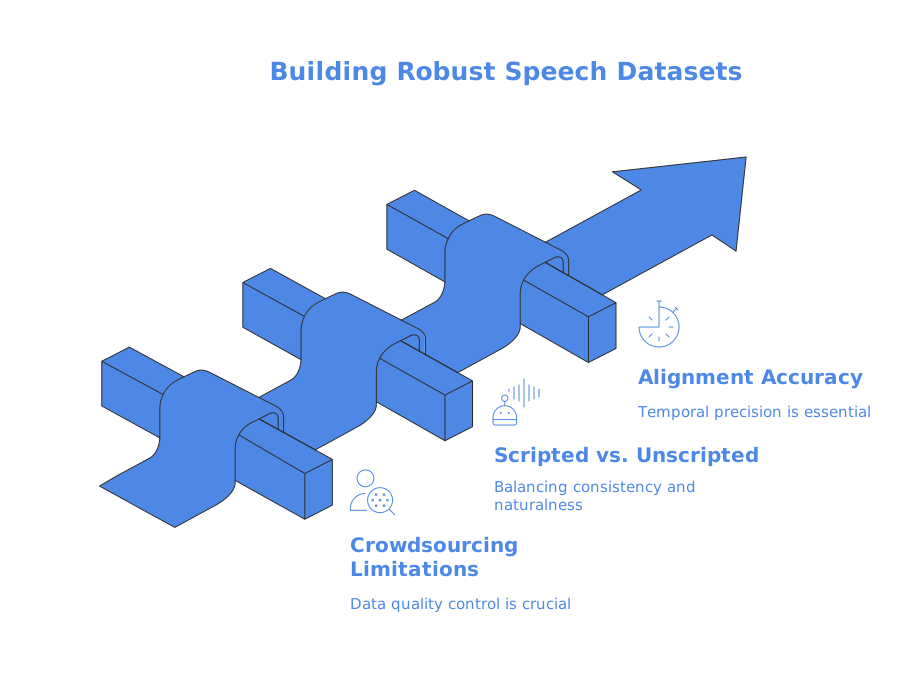
Crowdsourcing enables large-scale collection of speech from speakers across different countries, dialects, and demographic groups. This method facilitates diverse linguistic representation and supports dataset scalability.
Scripted and Unscripted Recording
Scripted prompts provide consistent linguistic coverage, while unscripted speech captures natural conversation patterns. Combining both strengthens model performance in structured and open-ended tasks.
Alignment and Segmentation Tools
Automated forced aligners help synchronize transcripts with speech. Linguists then review and correct these alignments to ensure temporal accuracy, especially for languages with complex phonetic structures.
Annotation and Quality Assurance for Multilingual Data
Multi-Language Transcription and Verification
Native speakers transcribe and validate audio samples to ensure linguistic accuracy. Transcription quality is essential for both ASR and training multilingual language models.
Phonetic and Prosodic Review
Some datasets require phonetic labeling or prosody annotation. Linguists verify tone, stress, and intonation patterns to help models learn fine-grained acoustic cues.
Metadata Validation Across Languages
Annotators verify language tags, speaker information, dialect labels, and recording conditions. Metadata consistency is essential for managing datasets that span dozens of languages.
Applications Enabled by Multilingual Speech Datasets
Automatic Speech Recognition for Global Products
Multilingual datasets support ASR systems used in international apps, customer service platforms, and consumer devices. These systems must handle varied pronunciation patterns across languages.
Speech Translation Systems
Training multilingual translation engines requires speech data aligned across languages. Multilingual datasets provide the acoustic and linguistic signals necessary for accurate translation.
Linguistic Analytics and Voice Technology
Multilingual speech datasets support research in linguistics, voice biometrics, content moderation, and customer analytics across diverse populations.
Supporting Multilingual Speech Dataset Development
Multilingual speech datasets are essential for AI systems that operate across diverse languages, dialects, and accents. Their quality depends on linguistic diversity, native transcription, consistent metadata, and multi-stage quality assurance. If your team needs help building, annotating, or validating multilingual datasets, we can explore how DataVLab supports high-quality speech dataset development for global AI applications.
What is Multilingual speech dataset?
Multilingual speech datasets contain transcribed, segmented, and labeled audio samples from speakers of multiple languages, dialects, and accents. These datasets enable AI systems to perform speech recognition, translation, and voice analytics across global populations. They include scripted and spontaneous speech, phonetic variations, speaker diversity, device variability, and environmental noise that reflect real-world communication.
What does the article explain about why multilingual speech datasets matter?
Multilingual datasets allow AI systems to understand speech across languages without building separate models for each linguistic group. Research from the Language Technologies Institute at Carnegie Mellon University highlights that cross-language modeling improves accuracy by sharing acoustic patterns between related languages.
What does the section on “Variability that strengthens multilingual speech models” explain?
Including dialects, accents, and local pronunciation patterns improves model performance and reduces geographic bias. The International Speech Communication Association emphasizes that dialect coverage is essential for global ASR. Recording quality varies across smartphones, headsets, microphones, and telecommunication channels.
How can teams ensure quality in Multilingual speech dataset?
Native speakers transcribe and validate audio samples to ensure linguistic accuracy. Transcription quality is essential for both ASR and training multilingual language models. Some datasets require phonetic labeling or prosody annotation.
What does the section on “Metadata validation across languages” explain?
Annotators verify language tags, speaker information, dialect labels, and recording conditions. Metadata consistency is essential for managing datasets that span dozens of languages.
What are the main use cases for Multilingual speech dataset?
Multilingual datasets support ASR systems used in international apps, customer service platforms, and consumer devices. These systems must handle varied pronunciation patterns across languages. Training multilingual translation engines requires speech data aligned across languages.