Construction Safety Datasets : How Annotated Jobsite Images Train Hazard Detection AI
.jpeg)
Construction safety datasets provide annotated visual data that enable AI systems to detect hazards, monitor jobsite conditions, and analyze worker behavior. This article explains how these datasets are designed, what types of hazards they capture, and how annotation teams label equipment, worker movements, and environmental risks. It outlines dataset structure, annotation guidelines, and quality assurance processes that ensure accurate detection of dangerous conditions. Readers will also learn how construction safety datasets support automated monitoring, hazard zone detection, proximity alerts, and fall detection. The article concludes with future directions in multimodal safety data and real-time risk analytics.
- Construction safety datasets provide annotated visual data that enable AI systems to detect hazards, monitor jobsite conditions, and analyze worker behavior.
- This article explains how these datasets are designed, what types of hazards they capture, and how annotation teams label equipment, worker movements, and environmental risks.
- Readers will also learn how construction safety datasets support automated monitoring, hazard zone detection, proximity alerts, and fall detection.
- The article concludes with future directions in multimodal safety data and real-time risk analytics.
Understanding Construction Safety Datasets
A construction safety dataset is a curated collection of images or video frames from active construction environments, annotated to identify hazards, unsafe worker behaviors, equipment movements, and high-risk scenarios. These datasets represent real jobsites where workers interact with machinery, tools, and temporary structures. Annotators label factors such as proximity to heavy equipment, hazardous zones, worker positioning, and dangerous environmental conditions. Research centers such as CPWR emphasize the importance of understanding construction hazards and the dynamics of worksite risk factors when analyzing jobsite imagery.
Why Construction Safety Datasets Matter
Construction work is consistently ranked among the highest-risk occupations due to dynamic worksites, frequent changes in conditions, and the presence of heavy machinery. Manual supervision alone cannot provide continuous monitoring across large or complex environments. AI systems trained on construction safety datasets can detect potentially dangerous situations in real time by recognizing hazard patterns in visual data. These systems help safety managers intervene before incidents occur and support more proactive risk management programs. Datasets that accurately represent real jobsite conditions are essential for developing effective AI solutions.
How Construction Safety Datasets Differ From PPE Datasets
While PPE datasets focus on identifying personal protective equipment, construction safety datasets cover a broader range of hazards, including machinery movement, environmental risks, worker positioning, and unstable structures. These datasets capture not only objects but also spatial relationships between workers and equipment. The emphasis is on dynamic hazards rather than compliance verification. This distinction ensures that the content of construction safety datasets does not overlap with PPE detection and remains focused on situational awareness.
Components of a Construction Safety Dataset
Construction safety datasets include several structured components that support hazard recognition and predictive safety analytics.
Worker Interaction and Positioning
Annotated datasets capture how workers move, interact with equipment, and navigate hazardous areas. Annotators identify worker positions, postures, and interactions with tools or machinery. These visual cues help AI systems detect when workers approach danger zones or engage in unsafe behavior. Organizations like the National Safety Council highlight the importance of tracking worker behavior patterns to understand how incidents occur.
Equipment and Machinery Annotation
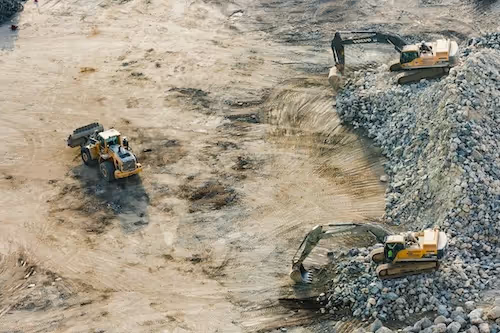
Construction machinery such as excavators, cranes, forklifts, and loaders contribute to many jobsite hazards. Annotators label each piece of equipment, determine its operational state, and identify its motion direction when visible. These labels help AI systems understand the risk posed by moving equipment and detect proximity violations. Machinery annotation requires careful attention to object boundaries and orientation due to varied shapes and movement patterns.
Hazardous Zone Identification
Hazard zones include areas where falling materials, electrical exposure, or heavy machinery pose significant risks. Annotators label hazard zones by identifying boundaries, barriers, and temporary safety markers. These annotations allow AI systems to determine whether workers are within unsafe areas. Hazard zone identification often includes labeling ground conditions such as trenches, open pits, or elevated platforms.
Annotation Workflows for Construction Safety
Annotation workflows ensure that hazard information is captured accurately across thousands of frames or images.
Object-Level Hazard Annotation
Annotators label equipment, tools, and environmental features that contribute to risk. Boundaries must be drawn precisely to help models detect hazards reliably. Each label reflects specific hazard categories such as falling object risks, electrical sources, or unstable surfaces. Object-level annotation provides the foundation for understanding how hazards interact with workers and the environment.
Proximity and Spatial Relationship Annotation
Construction safety datasets require annotations that describe spatial relationships between workers and hazards. Annotators identify distances between workers and equipment or hazard zones. These relationships help models determine when workers enter dangerous areas. Annotators also identify whether moving equipment is approaching workers or whether workers are operating in congested zones.
Temporal Event Annotation in Video Data
When using video data, annotators label sequences of events such as equipment movements, worker interactions, and near-misses. Temporal annotation helps models detect early warning signs of risk escalation. Annotators analyze motion patterns and transitions between frames to assign accurate event labels. These annotations support predictive safety applications that require understanding hazard progression over time.
Challenges in Annotating Construction Safety Data
Construction safety annotation poses unique visual and contextual challenges that influence dataset quality.
Constantly Changing Worksite Conditions
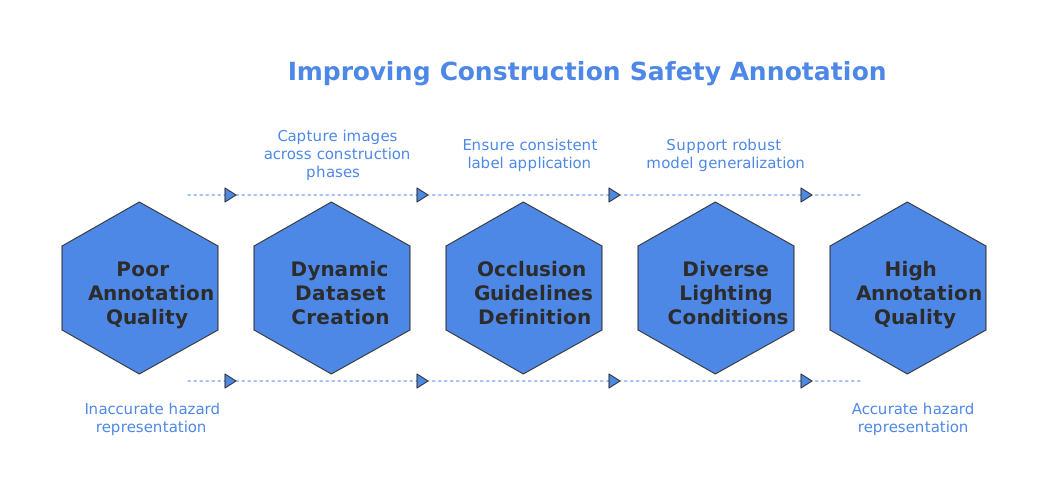
Construction sites evolve rapidly as work progresses. Structures change, equipment relocates, and new hazards appear daily. Annotators must adjust labels to reflect these changes and ensure that hazards are accurately represented. Dynamic environments require datasets that include images captured across multiple phases of construction to ensure diversity.
Occlusion and Visibility Issues
Workers and machinery frequently obscure one another in real jobsite footage. Annotators must determine whether partially visible objects should be labeled and how to handle ambiguous cases. Occlusion guidelines define visibility thresholds that ensure consistent label application. These decisions influence model performance in congested environments.
Inconsistent Lighting and Weather Conditions
Construction environments vary widely in lighting due to daytime shifts, artificial lights, and weather changes. Bright sunlight, shadows, rain, dust, or fog can distort object boundaries. Annotators must interpret these distortions carefully to maintain accuracy. Datasets must include diverse lighting conditions to support robust model generalization.
Designing Annotation Guidelines
Annotation guidelines define the standards annotators use to ensure consistency across the dataset.
Hazard Category Definitions
Guidelines describe hazard categories such as electrical hazards, falling object risks, unstable surfaces, or machinery danger zones. Each category has clear definitions and examples that help annotators differentiate among hazards. These categories align with industrial or construction safety standards published by OSHA, which outline the major sources of construction incidents.
Spatial and Temporal Labeling Rules
Guidelines instruct annotators on how to label proximity violations and sequence-based events. Spatial rules describe how to calculate distances between workers and hazards. Temporal rules specify how to annotate movements or transitions. Examples illustrate cases where workers cross hazard zone boundaries or equipment moves into restricted areas.
Handling Ambiguous Scenarios
Guidelines must address cases where hazards are unclear due to partial visibility or incomplete context. Annotators refer to examples that illustrate how to handle ambiguous or borderline cases. These examples reduce interpretation differences and improve dataset reliability.
Quality Assurance for Construction Safety Datasets
Quality assurance processes verify accuracy, consistency, and completeness across hazard annotations.
Multi-Stage Review
Datasets undergo multiple review cycles to confirm quality. Primary annotators complete initial labeling, followed by secondary reviewers who identify inconsistencies or missing elements. Reviewers compare labels across annotators to detect disagreements. This multi-stage review ensures that hazardous situations are captured precisely.
Edge Case Evaluation
Quality assurance teams review difficult cases such as complex machinery interactions, partially visible hazards, or unusual environmental conditions. These cases require careful interpretation and may involve consultation with safety engineers or domain experts. Edge case evaluation improves the dataset’s ability to handle challenging real-world scenarios.
Fall Detection as a Component of Construction Safety
Fall detection is a crucial safety task that relies on annotated images showing workers losing balance or lying on the ground in unsafe positions.
Anatomy of a Fall Detection Subset
Fall detection datasets within construction safety collections contain frames showing slip, trip, or fall events. Annotators identify worker posture, orientation, and surrounding hazards. These labels help models differentiate between normal movements and dangerous falls. The subset captures varied environments such as elevated platforms, ladders, and scaffolding where fall risks are highest.
Distinguishing Falls From Normal Movements
Annotators must differentiate falls from benign movements such as bending, crouching, or kneeling. Guidelines describe posture patterns that indicate loss of balance or danger. These distinctions are essential for reducing false alerts. Accurate annotations help models detect fall events with high reliability.
Applications of Construction Safety Datasets
Construction safety datasets support a wide range of AI applications across worksites, engineering teams, and safety monitoring systems.
Automated Hazard Detection
AI systems trained on annotated datasets can automatically identify hazardous conditions such as workers entering danger zones or operating near heavy equipment. Automated detection improves response times and enhances situational awareness for site supervisors. These systems help reduce incidents by alerting teams to unsafe conditions.
Equipment Proximity Monitoring
Models track the distance between workers and moving machinery, generating alerts when workers enter high-risk proximity zones. This application helps prevent common incidents involving heavy equipment. It also supports the safe operation of autonomous or semi-autonomous machinery.
Incident Prevention and Root-Cause Analysis
Annotated datasets support retrospective analysis of incidents to identify root causes. AI systems analyze patterns in worker behavior, equipment movement, and environmental changes such as concrete cracks. These insights help teams refine safety protocols and reduce the likelihood of future incidents. Research from occupational psychology highlights how human factors contribute to jobsite safety outcomes.
Future Directions in Construction Safety Datasets
Construction safety datasets continue to evolve as new technologies and data sources emerge.
Multimodal Safety Data
Future datasets may integrate thermal imaging, LiDAR scans, depth data, and sensor-based telemetry. Multimodal datasets help models detect hazards in low visibility or complex environments. Combining data types enables more accurate risk detection across diverse scenarios.
Predictive Risk Analytics
Advanced models may predict hazard development by analyzing changes in equipment movement, worker positioning, and jobsite layout. Predictive analytics require datasets with detailed temporal annotations. These capabilities support proactive interventions and help prevent incidents before they occur.
If You Are Creating Construction Safety or Hazard Detection Datasets
Developing construction safety AI requires high-quality annotated data that reflects the complexity of real jobsites. If you are building datasets for hazard detection, proximity monitoring, fall detection, or jobsite analytics, the DataVLab team can help design annotation workflows that ensure precision, consistency, and operational relevance. Share your objectives, and we can support your safety AI initiatives with robust and well-structured data.
What are Construction safety datasets?
Construction safety datasets provide annotated visual data that enable AI systems to detect hazards, monitor jobsite conditions, and analyze worker behavior. This article explains how these datasets are designed, what types of hazards they capture, and how annotation teams label equipment, worker movements, and environmental risks.
What does the article explain about how construction safety datasets differ from PPE datasets?
While PPE datasets focus on identifying personal protective equipment, construction safety datasets cover a broader range of hazards, including machinery movement, environmental risks, worker positioning, and unstable structures. These datasets capture not only objects but also spatial relationships between workers and equipment.
What does the section on “Annotation workflows for construction safety” explain?
Annotation workflows ensure that hazard information is captured accurately across thousands of frames or images. Annotators label equipment, tools, and environmental features that contribute to risk. Boundaries must be drawn precisely to help models detect hazards reliably.
What are the main challenges of Construction safety datasets?
Construction safety annotation poses unique visual and contextual challenges that influence dataset quality. Structures change, equipment relocates, and new hazards appear daily. Annotators must adjust labels to reflect these changes and ensure that hazards are accurately represented.
How can teams ensure quality in Construction safety datasets?
Quality assurance processes verify accuracy, consistency, and completeness across hazard annotations. Datasets undergo multiple review cycles to confirm quality. Primary annotators complete initial labeling, followed by secondary reviewers who identify inconsistencies or missing elements.
What is the future of Construction safety datasets?
Construction safety datasets continue to evolve as new technologies and data sources emerge. Future datasets may integrate thermal imaging, LiDAR scans, depth data, and sensor-based telemetry. Multimodal datasets help models detect hazards in low visibility or complex environments.