
Medical Waveform Annotation Services for ECG, EEG, EMG, and Physiological Signal AI

Medical Waveform Annotation Services
Built for teams shipping medical AI who need reliable labeled documents. You get segmentation masks and classification labels, stable label guidelines, and QA you can audit, without slowing your roadmap. Medical Waveform Annotation Services is delivered with secure workflows and consistent reporting from pilot to production.
High accuracy annotation of ECG, EEG, EMG, and physiological waveform signals.
Structured labeling of segments, events, and temporal patterns across long recordings.
Support for multi channel and multimodal signal datasets.
Biomedical waveforms capture electrical, physiological, and neurological activity that is essential for monitoring patient health and supporting early detection workflows. Training AI systems on waveform data requires accurate labeling of signal segments, patterns, events, and predefined diagnostic indicators. These datasets must be annotated consistently across long time sequences and often include subtle variations that strongly influence model performance. DataVLab provides medical waveform annotation services for clinical technology companies, research labs, and AI teams developing signal based models.
Annotators follow detailed guidelines for each waveform type, applying consistent rules for segment boundaries, event classification, pattern detection, and annotation across noisy or artifact heavy signals. We support ECG, EEG, EMG, EOG, respiratory waveforms, sleep study data, polysomnography, accelerometer derived signals, and multimodal physiological recordings.
Tasks include beat level labeling, waveform segmentation, spike marking, event detection, sleep stage annotation, rhythm classification, and multi channel signal labeling. Quality control involves sample based review, cross comparison between reviewers, annotation drift detection, and instruction refinement.
Sensitive datasets are managed under GDPR aligned workflows with optional EU only annotation. Our structured workflows help AI teams build accurate and reliable models for rhythm analysis, neurological monitoring, sleep research, and multi sensor health systems.
How DataVLab Supports Waveform Based AI Development
We apply structured guidelines to ensure consistent annotation across complex biomedical and physiological signals.

ECG Waveform Annotation

Beat level and interval labeling
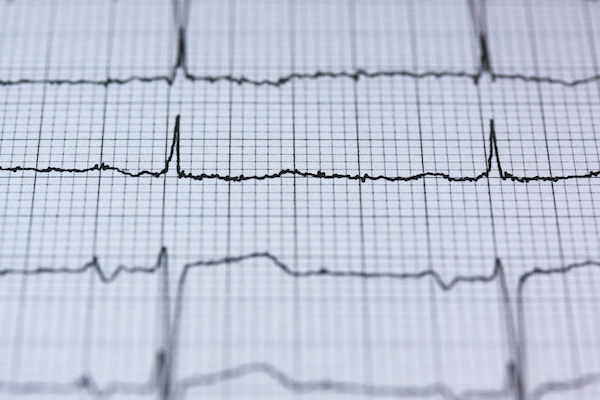
We annotate P waves, QRS complexes, T waves, intervals, rhythm segments, and predefined patterns across ECG recordings.
EEG Event and Spike Labeling
Annotation for neurological signal analysis
We label spikes, sharp waves, epochs, and channel specific events used in epilepsy research, sleep studies, and neurological monitoring.
EMG and Muscle Activation Annotation
Signal segmentation for movement and strain analysis
We annotate muscle activation patterns, amplitude changes, and contraction events in EMG signals.
Sleep Stage and Respiratory Waveform Annotation
Structured labeling for polysomnography and sleep research
We annotate sleep stages, respiratory events, movement artifacts, and signal changes that support sleep study classification models.
Multimodal Physiological Signal Annotation
Aligned labeling across multiple sensor channels
We annotate synchronized datasets that combine ECG, EEG, EMG, accelerometry, and respiratory signals while maintaining temporal consistency.
Waveform Dataset Quality Review
Drift detection and annotation refinement
Reviewers correct mislabeled segments, check event timing, and refine consistency across recordings to produce clean training data.
Discover How Our Process Works

Defining Project
Sampling & Calibration
Annotation
Review & Assurance
Delivery
Explore Industry Applications

We provide solutions to different industries, ensuring high-quality annotations tailored to your specific needs.
We provide high-quality annotation services to improve your AI's performances

Annotation & Labeling for AI
Unlock the full potential of your AI application with our expert data labeling tech. We ensure high-quality annotations that accelerate your project timelines.
Medical Annotation Services
Medical annotation services for radiology, pathology, clinical text, and biosignals. Expert workflows, strict QA, and secure handling for sensitive healthcare datasets.
Medical Data Labeling Services
High quality labeling for medical imaging, clinical documents, biosignals, and multimodal datasets used in healthcare and biomedical AI development.
Medical Image Annotation Services
High accuracy annotation for MRI, CT, X-ray, ultrasound, and pathology imaging used in diagnostic support, research, and medical AI development.
Radiology Image Annotation Services
High accuracy annotation for radiology imaging including MRI, CT, X-ray, PET, and specialized scans used in diagnostic support and medical AI development.
Pathology Annotation Services
High accuracy annotation for pathology and microscopy datasets including whole slide images, tissue regions, cellular structures, and oncology research features.
FAQs
Here are some common questions we receive from our clients to assist you.
What is medical waveform annotation and what does it include?
Medical waveform annotation labels physiological signal data (ECG, EEG, EMG, respiratory signals, blood pressure waveforms, pulse oximetry, and other biosignals) so that AI models can learn to detect clinical events, classify signal patterns, identify anomalies, and make diagnostic predictions from time-series physiological data. It includes annotating ECG rhythms and arrhythmias, EEG seizure events and sleep stages, respiratory event detection (apnea, hypopnea), EMG muscle activity patterns, and multi-lead signal morphology characterization. Medical waveform annotation requires clinical expertise because the relevant patterns require knowledge of physiology and clinical cardiology, neurology, or pulmonology to correctly identify.
What is ECG annotation and what does it require?
ECG annotation labels cardiac rhythm and conduction abnormalities in electrocardiogram recordings. Primary annotation categories include rhythm classification (normal sinus rhythm, atrial fibrillation, atrial flutter, ventricular tachycardia, bradyarrhythmias), morphological features (P-wave, QRS complex, T-wave boundaries and characteristics), ST segment changes (elevation, depression, shape), conduction abnormalities (bundle branch blocks, AV blocks), and beat-level labels (normal beats, ectopic beats, artifact). ECG annotation requires cardiologist review for arrhythmia classification and for characterizing subtle morphological features that distinguish benign from clinically significant abnormalities.
What is EEG annotation and what expertise does it require?
EEG annotation labels brain electrical activity recorded from scalp electrodes for seizure detection, sleep staging, depth of anesthesia monitoring, and brain-computer interface training. Seizure annotation requires neurologist expertise to correctly identify ictal patterns, pre-ictal changes, and post-ictal states and to distinguish true seizures from movement artifacts and electrode artifacts. Sleep staging annotation classifies EEG recordings into AASM sleep stages (Wake, N1, N2, N3/SWS, REM) across overnight recordings, typically in 30-second epochs, requiring polysomnographic expertise. EEG annotation projects are typically performed by certified sleep technologists for sleep staging or clinical neurophysiologists for seizure detection.
What privacy considerations apply to physiological waveform data?
Waveform data presents unique privacy considerations. Long-term ECG (Holter) recordings, EEG recordings, and other continuous waveforms can serve as biometric identifiers for individuals: cardiac rhythm patterns and EEG spectral characteristics can identify a person with high confidence. This makes waveform data special category personal data under GDPR regardless of whether patient names are attached. De-identification of waveform data requires removing metadata that identifies the patient (recording dates, device IDs, clinical site identifiers) and considering whether the waveform content itself is identifying. DataVLab implements waveform annotation with GDPR-compliant data handling as standard practice for European programs.
How long does medical waveform annotation take?
Waveform annotation throughput depends heavily on signal quality, annotation granularity, and the clinical complexity of the signal patterns. Simple beat detection annotation on clean ECG recordings can proceed at 100 to 200 beats per minute of annotation time. Arrhythmia classification and full morphological analysis of complex ECG recordings requires cardiologist time at 15 to 30 minutes per hour of recording. EEG sleep staging at 30-second epoch resolution typically requires 1 to 3 hours of expert technologist time per hour of overnight recording. For large waveform annotation programs, algorithmic pre-annotation (auto-detect beats or sleep stages, human expert reviews and corrects) typically reduces total annotation time by 40 to 60 percent.
What medical waveform annotation services does DataVLab provide?
DataVLab provides medical waveform annotation for ECG and cardiac rhythm analysis (arrhythmia detection, morphological characterization, stress test annotation), EEG annotation (seizure detection, sleep staging, anesthesia monitoring, BCI training data), respiratory waveform annotation (polysomnography, spirometry, capnography), EMG annotation (muscle activity patterns, clinical neurophysiology applications), and multi-channel physiological signal annotation for ICU monitoring and wearable device AI. All waveform annotation programs use domain-expert reviewers with relevant clinical specialization. EU-based annotation with GDPR-compliant waveform data handling is available for European clinical AI programs.


Custom service offering

Up to 10x Faster
Accelerate your AI training with high-speed annotation workflows that outperform traditional processes.

AI-Assisted
Seamless integration of manual expertise and automated precision for superior annotation quality.

Advanced QA
Tailor-made quality control protocols to ensure error-free annotations on a per-project basis.

Highly-specialized
Work with industry-trained annotators who bring domain-specific knowledge to every dataset.

Ethical Outsourcing
Fair working conditions and transparent processes to ensure responsible and high-quality data labeling.

Proven Expertise
A track record of success across multiple industries, delivering reliable and effective AI training data.

Scalable Solutions
Tailored workflows designed to scale with your project’s needs, from small datasets to enterprise-level AI models.

Global Team
A worldwide network of skilled annotators and AI specialists dedicated to precision and excellence.
Potential Today
Blog & Resources
Explore our latest articles and insights on Data Annotation




We are here to assist in providing high-quality data annotation services and improve your AI's performances