Fashion Market Segmentation Examples and Trend Datasets for AI-Driven Apparel Insights
.jpeg)

Fashion market segmentation organizes apparel consumers into structured groups based on style preferences, demographics, and purchasing behavior. When combined with trend datasets and annotated visual data, segmentation becomes a powerful tool for forecasting demand and optimizing product assortments. This article explains how segmentation models are built, how datasets are annotated, and how AI uses fashion imagery to identify patterns across consumer groups. It also examines the challenges of labeling apparel data, the importance of quality assurance, and the role of forecasting platforms in shaping retail strategy. The article concludes with emerging AI methods that link consumer segmentation with dynamic trend analytics.
- Fashion market segmentation organizes apparel consumers into structured groups based on style preferences, demographics, and purchasing behavior.
- When combined with trend datasets and annotated visual data, segmentation becomes a powerful tool for forecasting demand and optimizing product assortments.
- This article explains how segmentation models are built, how datasets are annotated, and how AI uses fashion imagery to identify patterns across consumer groups.
- It also examines the challenges of labeling apparel data, the importance of quality assurance, and the role of forecasting platforms in shaping retail strategy.
Understanding Fashion Market Segmentation
Fashion market segmentation divides apparel buyers into meaningful categories based on characteristics such as demographics, style preferences, purchasing motivations, and lifestyle attributes. Fashion retailers use segmentation to tailor assortments, predict demand, and refine marketing strategies. AI systems enhance segmentation by analyzing large datasets that include product images, customer behavior patterns, and historical sales trends. Reports such as the McKinsey State of Fashion highlight the importance of data-driven segmentation for modern apparel businesses navigating shifting consumer expectations. Effective segmentation enables retailers to identify emerging preferences and align product lines with market shifts.
Why Segmentation Matters in the Fashion Industry
Segmentation helps brands understand how different customer groups evaluate style, fit, and trends. Fashion is highly dynamic, and buying motivations vary significantly across markets. Some consumers focus on sustainability, while others prioritize affordability or brand identity. Segmentation provides the structure needed to analyze these differences at scale. It also influences assortment planning, pricing strategies, and inventory allocation. Retailers increasingly rely on segmentation models to anticipate seasonal trends and reduce excess stock.
How AI Enhances Fashion Segmentation
AI strengthens segmentation by analyzing visual and behavioral data that would be impossible to evaluate manually. Deep learning models interpret apparel images to identify patterns such as color palettes, silhouettes, fabrics, and styling attributes. Behavioral models analyze purchase frequency, browsing habits, and price sensitivity. These insights enable fashion brands to create data-rich segmentation profiles. Datasets that combine imagery with segmentation labels improve model capability and allow retailers to detect nuanced patterns across customer groups.
Components of Fashion Market Segmentation
Fashion segmentation systems rely on several structured components that capture consumer behavior and apparel characteristics.
Demographic Segmentation
Demographic segmentation organizes consumers based on age, gender, income level, or geographic location. These attributes influence fashion preferences and purchasing behavior. Demographic data is commonly combined with lifestyle attributes to refine segment definitions. Retailers use demographic segmentation to design product lines that reflect regional or age-specific preferences.
Psychographic Segmentation
Psychographic segmentation focuses on personal values, lifestyles, and attitudes. In fashion, psychographic factors such as trend sensitivity, minimalism, or interest in sustainable apparel influence buying decisions. Psychographic data provides valuable context for interpreting shopping behavior. Annotated datasets may include lifestyle labels that correlate with clothing preferences.
Behavioral Segmentation
Behavioral segmentation examines customer interactions with products, such as purchase frequency, browsing history, or responsiveness to promotions. Behavioral insights help retailers identify loyal customers, trend followers, budget shoppers, and experimental buyers. These categories inform marketing campaigns and on-site personalization strategies. Retailers integrate behavioral segmentation with product similarity analysis to enhance recommendation systems.
Style-Based Segmentation
Style segmentation groups customers based on their preferred aesthetics. Examples include streetwear, minimalist, classic, contemporary, or vintage preferences. Style segmentation relies heavily on image datasets annotated with fashion styles. The Business of Fashion provides industry insights that illustrate how consumer style preferences shift across regions and seasons.
Understanding Fashion Trend Datasets
Fashion trend datasets contain visual and metadata representations of apparel trends across seasons, categories, and regions. These datasets help AI models learn which styles, colors, and silhouettes gain popularity over time. Trend datasets integrate social media imagery, runway photography, retail catalog data, and consumer behavior patterns. Annotators label these images with trend attributes such as color themes, garment types, fabric choices, and style influences.
Sources of Trend Data
Trend data originates from multiple sources, including runway shows, street fashion photography, influencer posts, and retail catalog updates. Platforms dedicated to trend forecasting collect and organize these sources to help identify early signals. Fashion trend forecasting resources outline how analysts track changes in styles and identify emerging patterns. AI models trained on these datasets support data-driven forecasting.
How Trend Datasets Support Forecasting
Trend datasets provide structured examples of how fashion evolves across seasons. Deep learning models analyze these datasets to detect shifts in color palettes, silhouettes, and fabric choices. Retailers use trend predictions to plan assortments months in advance. Trend datasets also help identify micro-trends that evolve rapidly but have significant commercial impact.
Dataset Structure for Trend and Segmentation Analysis
Dataset structure plays a central role in supporting AI-driven fashion analytics.
Image-Level Labels
Images in fashion datasets include labels such as garment type, color, silhouette, pattern, and material. These labels allow models to analyze visual features that contribute to trend evolution. Image-level labels also support style-based segmentation by helping models identify aesthetic attributes.
Trend Attribute Labels
Trend datasets include labels such as seasonal trend direction, color family, era inspiration, and pattern classification. These labels help models detect shifts in consumer preferences. Trend attributes are often derived from expert analysis or curated social media datasets.
Consumer Segmentation Metadata
Some datasets include metadata that links apparel preferences to consumer segments. This metadata may include demographic or behavioral attributes that reveal how different segments adopt trends. Retailers use this information to predict which segments will adopt specific styles.
Annotation Workflows for Fashion Segmentation and Trend Datasets
Annotation workflows define how imagery and metadata are labeled to support segmentation and forecasting.
Identifying Apparel Categories
Annotators label garment categories such as shirts, dresses, outerwear, skirts, or pants. They also identify subcategories such as casualwear or formalwear. Category labeling provides structure for trend tracking and segmentation analysis.
Labeling Visual Style Attributes
Annotators assign style attributes such as silhouette type, pattern, color palette, and garment construction. These attributes support both segmentation and trend detection. Annotators rely on detailed guidelines to ensure consistent labeling across diverse apparel imagery.
Segment Label Assignment
When datasets include consumer segmentation labels, annotators assign segment tags based on style preferences or purchasing behavior. Segment label assignment often relies on textual descriptions, consumer profiles, or purchase patterns. These labels help models learn how segments respond to changing fashion trends.
Challenges in Annotating Fashion Trend and Segmentation Data
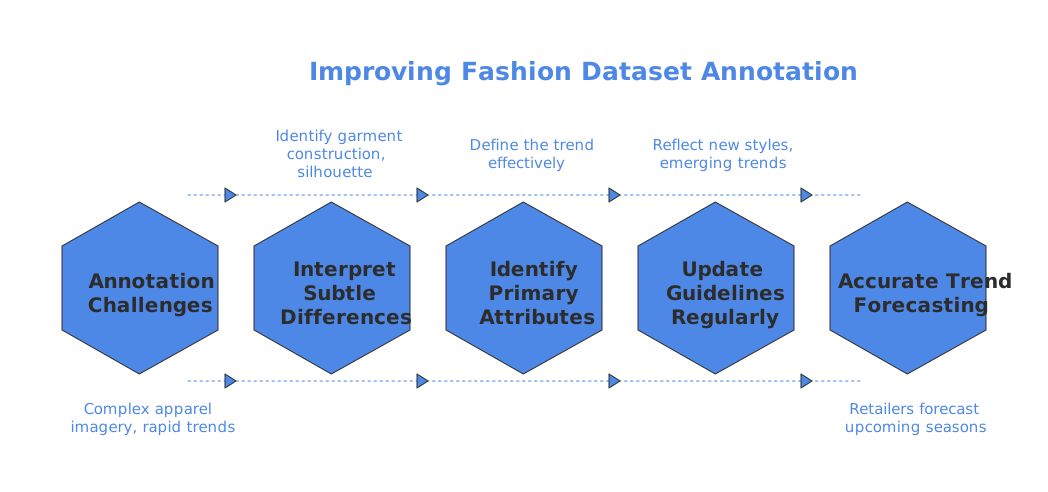
Fashion datasets present unique annotation challenges due to the complexity of apparel imagery and rapid pace of trend evolution.
High Variability in Apparel Styles
Fashion imagery varies widely in lighting, pose, and clothing structure. Annotators must interpret subtle differences in garment construction or silhouette. High variability increases the need for precise guidelines. Trend datasets include styles from multiple sources, increasing complexity.
Overlapping Visual Attributes
Garments may share overlapping features such as mixed patterns or hybrid silhouettes. Annotators must identify primary attributes that define the trend. Overlapping attributes complicate segmentation because they influence consumer perception differently.
Rapid Trend Evolution
Fashion trends evolve quickly, especially in fast-fashion contexts. Annotators must update guidelines to reflect new styles or emerging trends. Trend evolution requires datasets to remain current and reflect diverse global influences. Retailers rely on up-to-date datasets to forecast upcoming seasons accurately.
Designing Annotation Guidelines for Fashion Segmentation
Annotation guidelines ensure consistency across large, diverse fashion datasets.
Defining Visual Style Categories
Guidelines describe how to classify silhouettes, garments, and patterns. They provide examples of correct labels for style categories. These definitions help annotators understand how to interpret ambiguous apparel features.
Trend Attribute Interpretation
Guidelines explain how to interpret trend signals such as color direction or silhouette emphasis. Annotators use these rules to assign trend labels consistently. Trend interpretation often requires combining visual analysis with contextual cues.
Segment Labeling Procedures
Guidelines describe how segment labels should be assigned based on style or behavioral attributes. These procedures ensure that segment labels accurately represent consumer preferences. Accurate segment labeling improves model performance in segmentation tasks.
Quality Assurance for Fashion Trend Datasets
Quality assurance ensures that annotated datasets remain reliable and consistent.
Multi-Annotator Review
Quality assurance teams evaluate annotations across multiple reviewers to detect inconsistencies. Multi-annotator review supports guideline refinement and dataset reliability. This review process helps resolve cases where visual attributes overlap.
Attribute Consistency Checks
Quality assurance ensures that style attributes match visual features across similar garments. Consistent labeling supports downstream tasks such as trend forecasting and segmentation modeling. Attribute checks identify patterns of inconsistency.
Dataset Balance Monitoring
Reviewers examine category distribution to ensure that datasets include diverse trend and style examples. Balanced datasets support robust model training and prevent bias. Trend datasets must represent a range of styles and seasons.
Applications of Fashion Market Segmentation and Trend Datasets
Segmentation and trend datasets support multiple applications across the apparel industry.
Demand Forecasting
Trend and segmentation data help forecast demand for upcoming seasons. AI models identify which segments are most likely to adopt specific trends. These insights support assortment planning and inventory allocation.
Personalized Recommendations
Segmentation data improves recommendation systems by linking style preferences to consumer profiles. Recommendation systems use segmentation labels to curate personalized product lists. This enhances customer experience and increases engagement.
Visual Search and Discovery
Trend datasets support visual search systems that match user-uploaded images with similar garments. Visual search relies on texture, pattern, and silhouette recognition. Trend datasets improve the ability of these systems to identify relevant items.
Merchandise Planning
Segmentation and trend insights support merchandise planning by helping retailers align assortments with market demand. Retailers use these insights to optimize pricing, promotional strategies, and product introductions. Statista’s market data shows how apparel consumption patterns shift across global markets.
Future Directions in Fashion Segmentation and Trend Analytics
Advancements in AI will influence how segmentation and trend datasets evolve.
Dynamic Trend Modeling
Future systems will detect trend shifts in real time by analyzing continuously updated datasets. These models will interpret social signals and retail data to adjust trend forecasts dynamically. Dynamic modeling enhances responsiveness to emerging fashion patterns.
Multimodal Consumer Analysis
Next-generation models will link visual trends with behavioral and textual data. This multimodal analysis helps identify deeper connections between consumer behavior and style preferences. Retailers will be able to create granular segmentation models based on integrated insights.
Self-Updating Style Taxonomies
AI-driven taxonomies will adapt as fashion styles evolve. Self-updating taxonomies reduce manual maintenance and keep datasets aligned with current trends. These systems support more scalable segmentation and forecasting.
If You Are Preparing Fashion Segmentation or Trend Datasets
Accurate segmentation and trend datasets play a central role in forecasting demand, enriching catalogs, and understanding apparel consumers. If you are preparing labeled fashion datasets or building style-focused AI systems, the DataVLab team can support you with detailed annotation workflows and scalable dataset design. Share your objectives, and we can help structure fashion datasets that align with your analytical or predictive needs.
What is Fashion market segmentation examples and trend datasets for AI-Driven apparel insights?
Fashion market segmentation organizes apparel consumers into structured groups based on style preferences, demographics, and purchasing behavior. When combined with trend datasets and annotated visual data, segmentation becomes a powerful tool for forecasting demand and optimizing product assortments.
What is the future of Fashion market segmentation examples and trend datasets for AI-Driven apparel insights?
Fashion trend datasets contain visual and metadata representations of apparel trends across seasons, categories, and regions. These datasets help AI models learn which styles, colors, and silhouettes gain popularity over time. Trend datasets integrate social media imagery, runway photography, retail catalog data, and consumer behavior patterns.
What does the article explain about how trend datasets support forecasting?
Trend datasets provide structured examples of how fashion evolves across seasons. Deep learning models analyze these datasets to detect shifts in color palettes, silhouettes, and fabric choices. Retailers use trend predictions to plan assortments months in advance.
What does the section on “Annotation workflows for fashion segmentation and trend datasets” explain?
Annotation workflows define how imagery and metadata are labeled to support segmentation and forecasting. Annotators label garment categories such as shirts, dresses, outerwear, skirts, or pants. They also identify subcategories such as casualwear or formalwear.
What are the main challenges of Fashion market segmentation examples and trend datasets for AI-Driven apparel insights?
Fashion datasets present unique annotation challenges due to the complexity of apparel imagery and rapid pace of trend evolution. Fashion imagery varies widely in lighting, pose, and clothing structure. Annotators must interpret subtle differences in garment construction or silhouette.
What are the main use cases for Fashion market segmentation examples and trend datasets for AI-Driven apparel insights?
Segmentation and trend datasets support multiple applications across the apparel industry. Trend and segmentation data help forecast demand for upcoming seasons. AI models identify which segments are most likely to adopt specific trends.