Fruit Recognition Dataset: Annotating Fresh Produce for Retail, Grocery, and Food AI Systems
.jpeg)
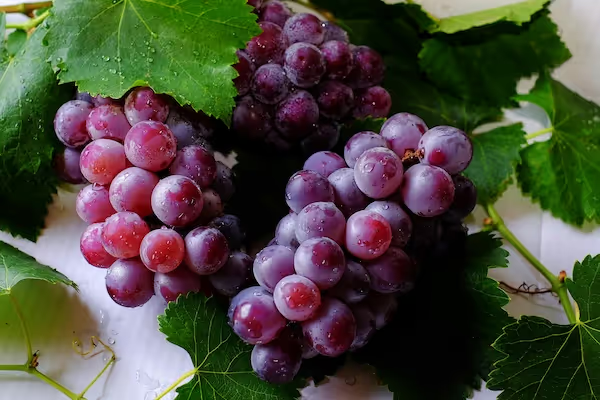
Fruit recognition datasets provide structured images and labels that help AI models identify different fruit types, assess quality, and classify produce in retail environments. These datasets include diverse conditions such as varied lighting, surface textures, ripeness levels, and species variations. This article explains how datasets are constructed, how annotation teams label fruit imagery, and how computer vision models learn to detect key features. It also examines dataset challenges, quality assurance workflows, and applications in grocery retail, automated checkout, and food quality monitoring. The article concludes with emerging trends such as multimodal food recognition and real-time produce detection.
- Fruit recognition datasets provide structured images and labels that help AI models identify different fruit types, assess quality, and classify produce in retail environments.
- This article explains how datasets are constructed, how annotation teams label fruit imagery, and how computer vision models learn to detect key features.
- It also examines dataset challenges, quality assurance workflows, and applications in grocery retail, automated checkout, and food quality monitoring.
- The article concludes with emerging trends such as multimodal food recognition and real-time produce detection.
Understanding Fruit Recognition in Computer Vision
Fruit recognition refers to the process of identifying and classifying fruits based on visual features such as shape, color, texture, and ripeness. AI models trained on fruit recognition datasets learn to distinguish among species and varieties while accounting for natural visual variability. These datasets contain thousands of labeled images that represent diverse fruit conditions. Fruits-360 is one of the most widely referenced collections, providing structured examples of fruit types captured under controlled and semi-controlled environments. Fruit recognition supports multiple applications in grocery retail, supply chain management, and automated checkout systems.
Why Fruit Recognition Matters in Retail and Grocery
Grocery retailers rely on accurate produce identification to streamline checkout, automate shelf monitoring, and support inventory systems. Traditional barcode systems cannot fully cover loose produce such as apples, bananas, or oranges, making visual recognition essential. Fruit recognition supports automated systems in self-checkout kiosks, smart carts, and mobile shopping apps. It also supports produce categorization for e-commerce platforms where customers search for specific varieties. Recognition accuracy enhances efficiency, reduces checkout errors, and improves customer experience.
Characteristics of Fruit Imagery
Fruit images often exhibit variability in shape, color, surface quality, and orientation. Fruits may appear glossy or matte depending on lighting conditions. Variants such as ripeness or bruising introduce additional complexity. Fruit recognition datasets capture these variations to help models generalize. Image diversity supports model robustness across retail environments.
Components of Fruit Recognition Datasets
Fruit recognition datasets contain structured elements that enable AI models to interpret fruit imagery with high accuracy.
Fruit Category Labels
Datasets include labels for fruit species such as apples, bananas, grapes, berries, oranges, and peaches. They may also include subcategories such as Fuji, Gala, or Granny Smith apples. Species and variety labels help models classify fruits with high granularity. These labels provide essential training data for classification tasks.
Image Diversity
Datasets include images captured under different lighting conditions, backgrounds, and angles. This diversity helps models generalize across varying store environments. Diverse image conditions reduce model sensitivity to noise and camera variability.
Surface and Texture Features
Datasets capture texture variations such as smooth, rough, spotted, or striped surfaces. Texture helps differentiate similar fruit types. ScienceDirect provides research insights on fruit quality assessment and how surface characteristics influence classification accuracy.
Annotation Workflows for Fruit Recognition
Annotation workflows define how fruit images are labeled for training classification models.
Class Label Assignment
Annotators assign fruit type labels based on visual characteristics and reference images. They review shape, surface patterns, and color distribution to determine correct labels. Class label accuracy is essential because misclassification impacts downstream model performance. Annotators follow detailed guides to ensure consistent labeling.
Bounding Box or Crop Verification
Some datasets include bounding boxes or cropped images focused on individual fruits. Annotators verify that the bounding boxes accurately capture the fruit region without cutting off important features. Accurate bounding boxes help models learn key fruit characteristics more effectively.
Quality and Ripeness Labeling
In advanced datasets, annotators label ripeness levels or fruit conditions. These labels help models detect quality variations and support food quality assessment. Ripeness labels may include stages such as unripe, ripe, or overripe. Condition labels help detect defects such as cracks or bruises.
Challenges in Fruit Dataset Annotation
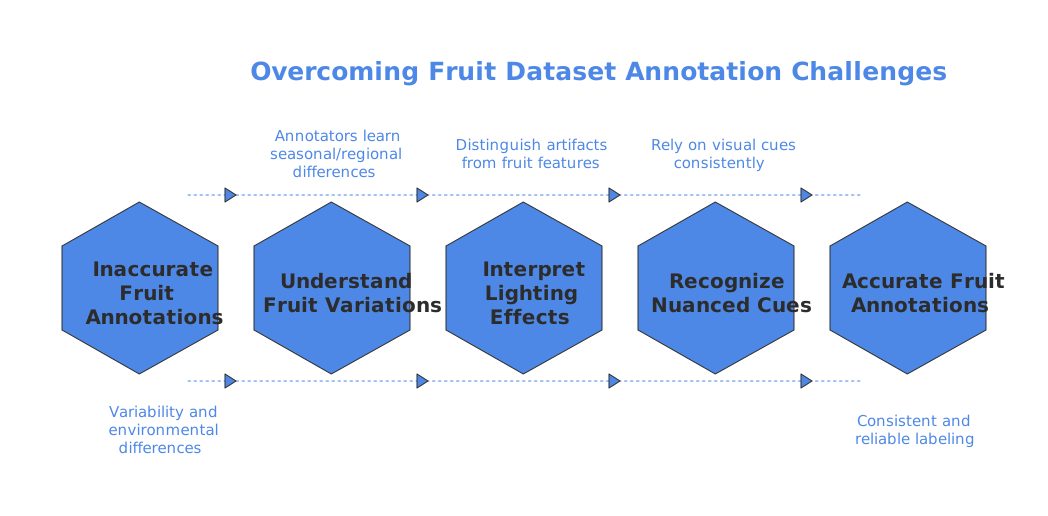
Fruit dataset annotation presents unique challenges due to natural variability and environmental differences.
Seasonal and Variety Differences
Fruits may vary in appearance depending on season and geographic origin. Annotators must understand these variations to label images accurately. For example, oranges from different regions may have varying skin textures. Variety diversity increases annotation complexity.
Lighting and Shadow Distortions
Lighting conditions affect color perception and surface visibility. Annotators must distinguish between lighting artifacts and intrinsic fruit features. Shadows can obscure important characteristics such as bruises. Lighting variation requires annotators to interpret images carefully.
Similar Visual Features
Some fruit types share similar shapes or colors. For example, peaches and nectarines may appear nearly identical. Annotators must rely on nuanced visual cues such as surface hair or color gradients to distinguish these items. This requires domain-specific knowledge and consistent guideline application.
Designing Annotation Guidelines for Fruit Recognition
Annotation guidelines provide rules for consistent fruit labeling across large datasets.
Fruit Category Definitions
Guidelines define each fruit type and provide examples of typical variations. They outline how to distinguish between similar species or varieties. Category definitions reduce ambiguity by clarifying visual boundaries.
Ripeness and Quality Criteria
Guidelines describe how annotators should label fruit quality characteristics. They define stages of ripeness and outline how to identify defects. These criteria ensure consistent quality labeling across datasets.
Lighting Interpretation Rules
Guidelines explain how to interpret lighting variations and distinguish them from actual fruit features. Annotators follow these rules to assign accurate labels even when images vary significantly. Lighting rules help maintain consistency across diverse image sets.
Quality Assurance for Fruit Recognition Datasets
Quality assurance ensures that dataset labels remain accurate and consistent.
Multi-Reviewer Label Verification
Reviewers evaluate fruit labels assigned by multiple annotators to identify inconsistencies. Disagreement analysis helps refine guidelines and improve annotation accuracy. Multi-reviewer checks strengthen dataset reliability.
Image Quality Screening
Reviewers assess images for clarity, resolution, and lighting quality. Images failing quality standards may be replaced. High-quality images support more effective model training. Image screening ensures dataset consistency.
Category Distribution Checks
Reviewers examine dataset distribution to ensure balanced representation of fruit categories. Balanced datasets improve model performance and reduce bias. Distribution checks help maintain dataset integrity.
Applications of Fruit Recognition Datasets
Fruit recognition datasets support a wide range of applications across retail, agriculture, and food technology.
Automated Checkout Systems
Fruit recognition models assist in identifying loose produce in self-checkout consumer kiosks. They help reduce manual entry and improve accuracy. Automated checkout systems rely on robust datasets to recognize fruit types quickly and reliably.
Smart Grocery Carts
AI-powered grocery carts use fruit recognition to identify items as customers place them inside. Recognition supports automated billing and improves shopping convenience. Real-time fruit detection requires fast, accurate models trained on diverse datasets.
Produce Quality Monitoring
Fruit recognition models help assess fruit quality in retail and supply chain environments. They detect ripeness levels and identify bruised or damaged items. IEEE research highlights how models interpret surface defects in fruit imagery.
Online Grocery Catalog Structure
Fruit recognition helps classify produce items in online grocery catalogs. Accurate classification supports search filtering, category placement, and product discovery. Retailers use fruit recognition to maintain catalog consistency across seasons.
Future Directions in Fruit Recognition
Advancements in AI and food recognition will influence how fruit datasets evolve.
Multimodal Fruit Recognition
Future models will integrate image data with weight, sensor data, or packaging information. Multimodal analysis will improve classification accuracy and help detect quality indicators. Enhanced multimodal datasets support more comprehensive fruit recognition systems.
Real-Time Produce Detection
Hardware advances will enable real-time fruit detection for automated checkout and robot-assisted grocery tasks. Real-time systems require compact models trained on diverse datasets. These systems support interactive retail experiences.
Integration with Food Standards
Future datasets may align with food quality standards such as those maintained by USDA and FAO. Integration with standards helps support food safety compliance and grading accuracy. FAO’s resources provide frameworks for evaluating produce quality.
If You Are Preparing Fruit Recognition or Grocery AI Datasets
High-quality fruit recognition datasets are essential for building AI systems that classify produce accurately, support automated checkout, and monitor food quality. If you are preparing datasets for retail or food AI applications, the DataVLab team can help design scalable annotation workflows with precise labeling and robust dataset structure. Share your needs, and we can support your grocery AI initiatives with tailored, high-quality data solutions.
What is Fruit recognition dataset?
Fruit recognition datasets provide structured images and labels that help AI models identify different fruit types, assess quality, and classify produce in retail environments. These datasets include diverse conditions such as varied lighting, surface textures, ripeness levels, and species variations.
Why does fruit recognition matter in retail and grocery?
Grocery retailers rely on accurate produce identification to streamline checkout, automate shelf monitoring, and support inventory systems. Traditional barcode systems cannot fully cover loose produce such as apples, bananas, or oranges, making visual recognition essential. Fruit recognition supports automated systems in self-checkout kiosks, smart carts, and mobile shopping apps.
What are the main challenges of Fruit recognition dataset?
Fruit dataset annotation presents unique challenges due to natural variability and environmental differences. Fruits may vary in appearance depending on season and geographic origin. Annotators must understand these variations to label images accurately.
What is involved in designing annotation guidelines for fruit recognition?
Annotation guidelines provide rules for consistent fruit labeling across large datasets. Guidelines define each fruit type and provide examples of typical variations. They outline how to distinguish between similar species or varieties.
How can teams ensure quality in Fruit recognition dataset?
Quality assurance ensures that dataset labels remain accurate and consistent. Reviewers evaluate fruit labels assigned by multiple annotators to identify inconsistencies. Disagreement analysis helps refine guidelines and improve annotation accuracy.
What is the future of Fruit recognition dataset?
Advancements in AI and food recognition will influence how fruit datasets evolve. Future models will integrate image data with weight, sensor data, or packaging information. Multimodal analysis will improve classification accuracy and help detect quality indicators.